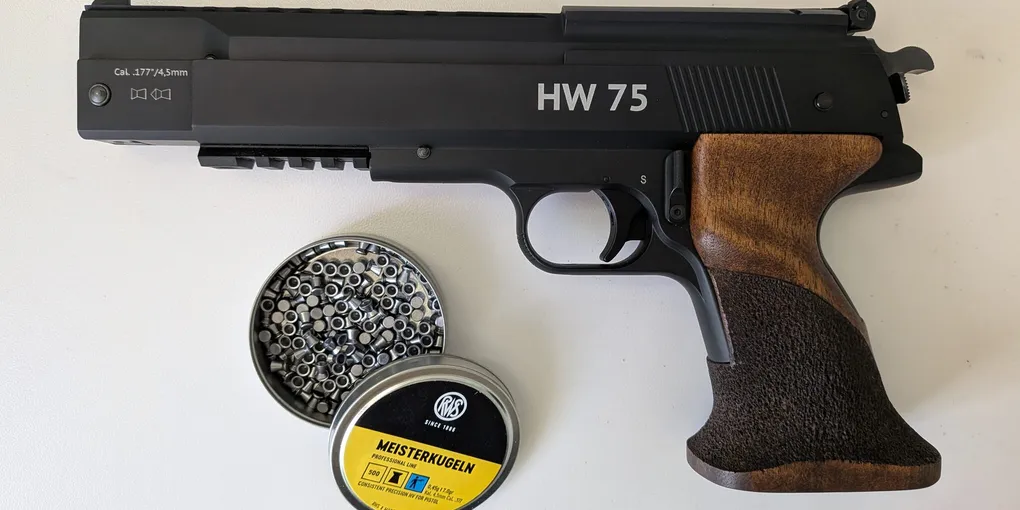
HW75 Air Pistol Impressions and Experiences
The Weihrauch HW75 is a German-made single-stroke pneumatic (SSP) premium air pistol. It grew from an early pneumatic prototype of the HW45/Beeman P1 and was sold in the US as the Beeman P2.
| Specification | HW75 |
|---|---|
| Caliber | .177 / 4.5 mm |
| Action | Single-stroke pneumatic; single shot |
| Published muzzle velocity | Approx. 125 m/s / 410 fps |
| Overall length | 280 mm / 11.0 in |
| Barrel length | 170 mm / 6.7 in |
| Weight | 1.06 kg / 2.34 lb |
| Trigger | Adjustable two-stage match trigger |
| Grip | Ambidextrous walnut |
Actual speed depends on the pellet and individual pistol.
Appearance and Build Quality
The HW75 feels premium as soon as I pick it up. The weight and substantial metal frame give it a dense, solid feel. The matte black finish and walnut grip suit that character: simple, traditional, and well made.
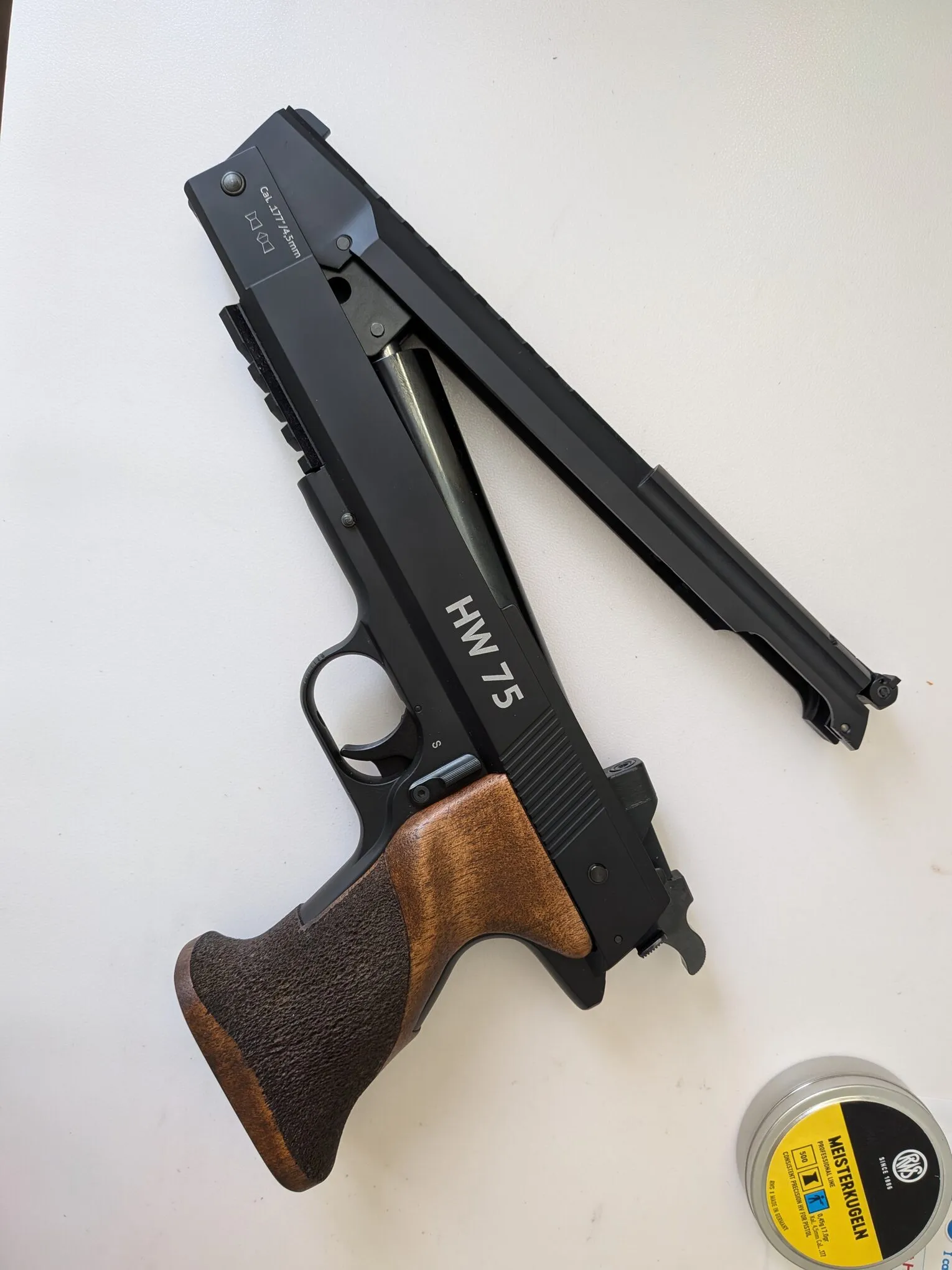
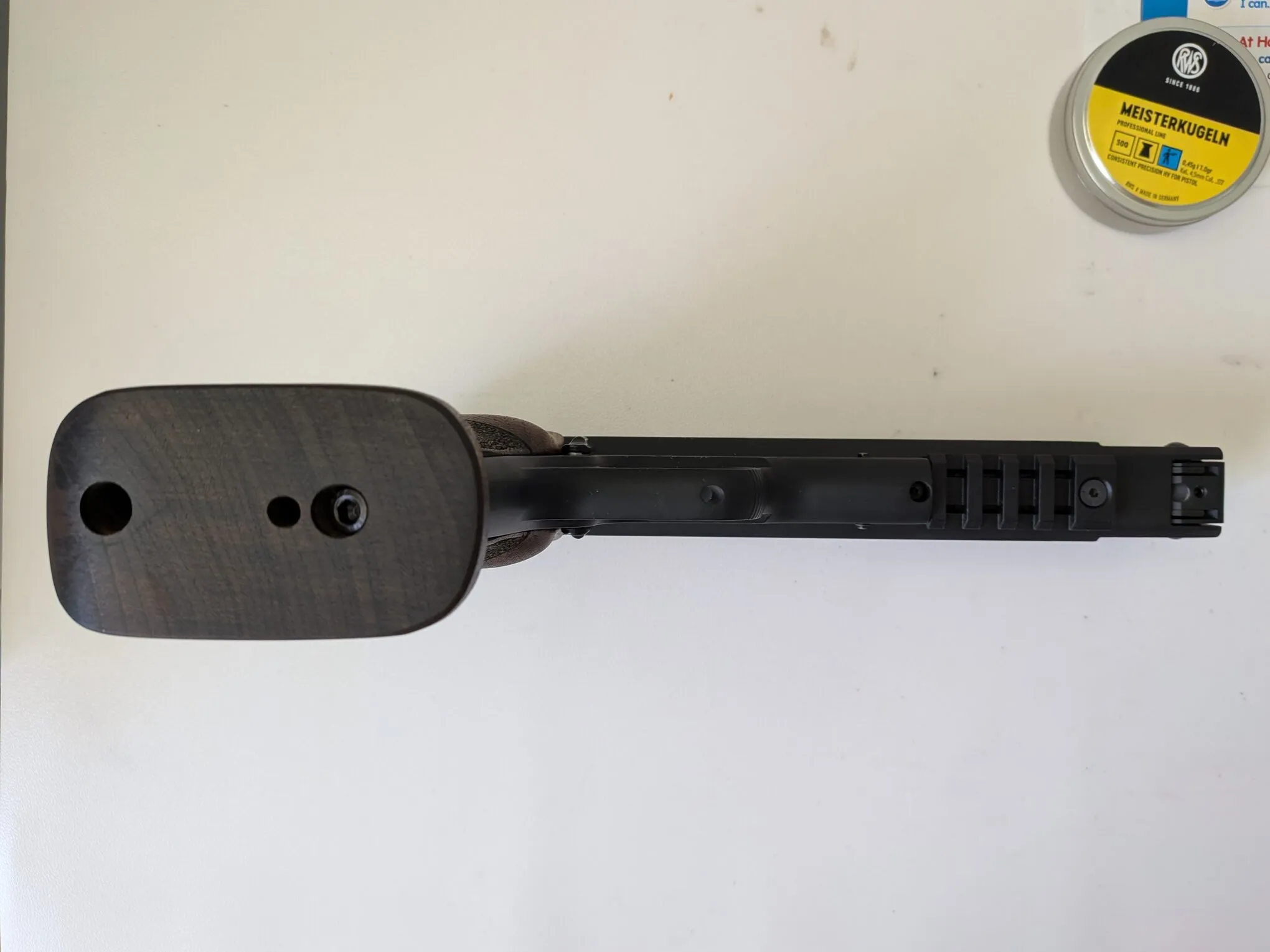
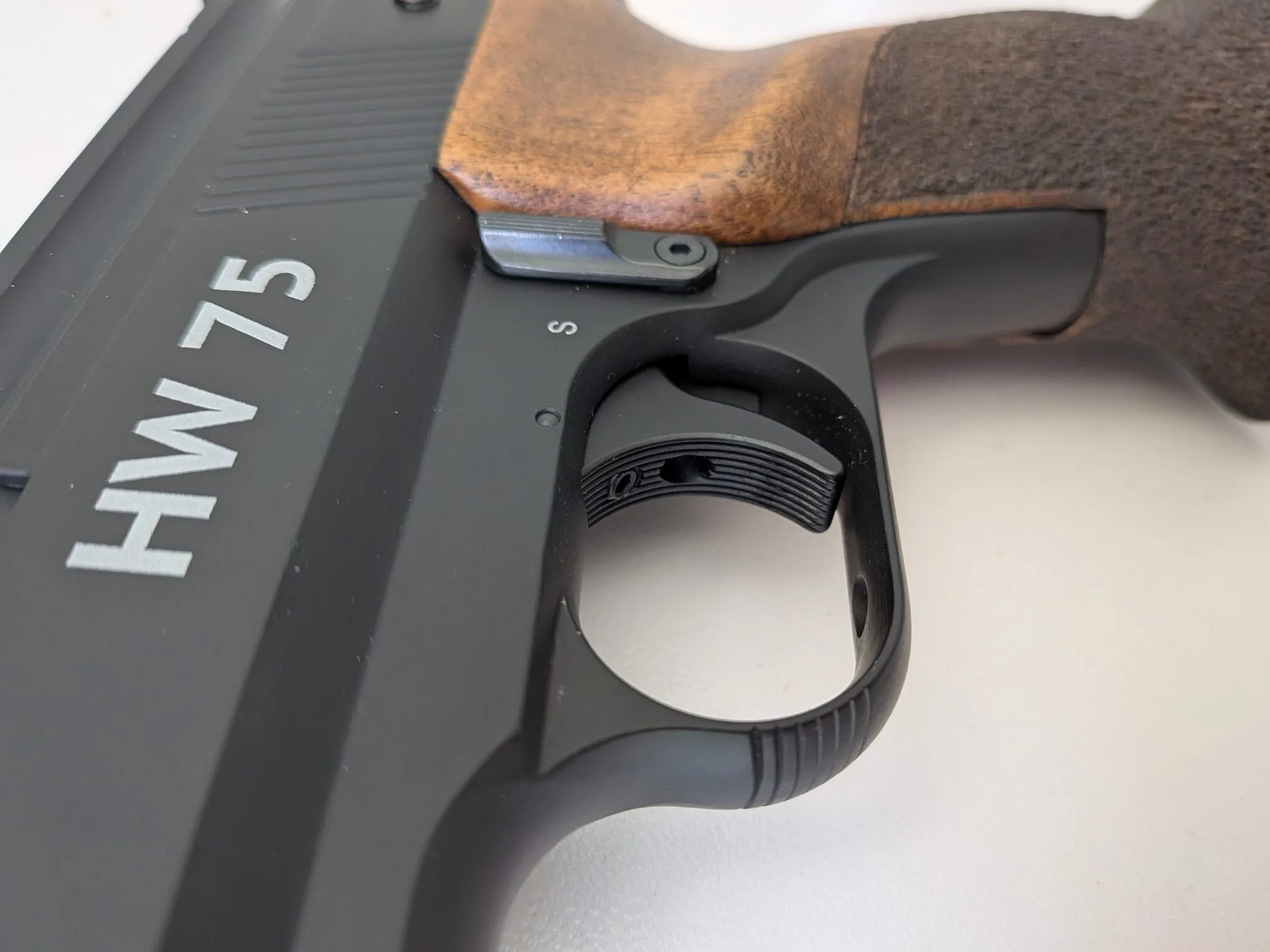
The adjustable two-stage match trigger adds to the HW75’s target-shooting character. Its first stage provides take-up before the second-stage release, allowing a deliberate trigger press. Two adjustment screws control the first-stage take-up (trigger slack) and the second-stage let-off point, respectively. The HW75 manual also identifies a separate trigger-weight adjustment beneath the wooden grip. The close-up below shows the broad, grooved trigger blade.
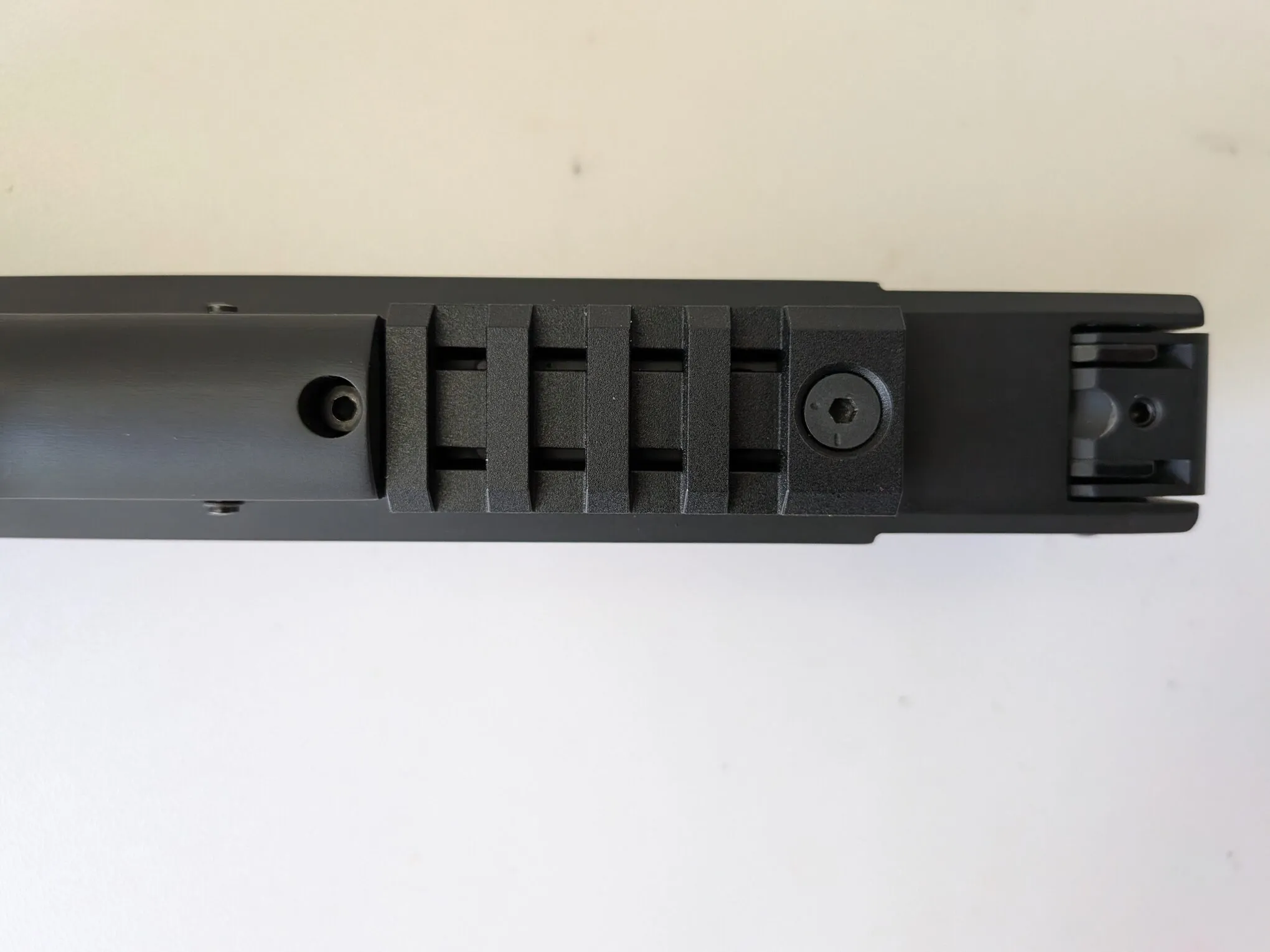
The accessory rail is is the only plastic parts and is removable. However, the screws are secured through the rail and cannot be refitted directly into the bare frame, so removing it leaves two visible screw holes.
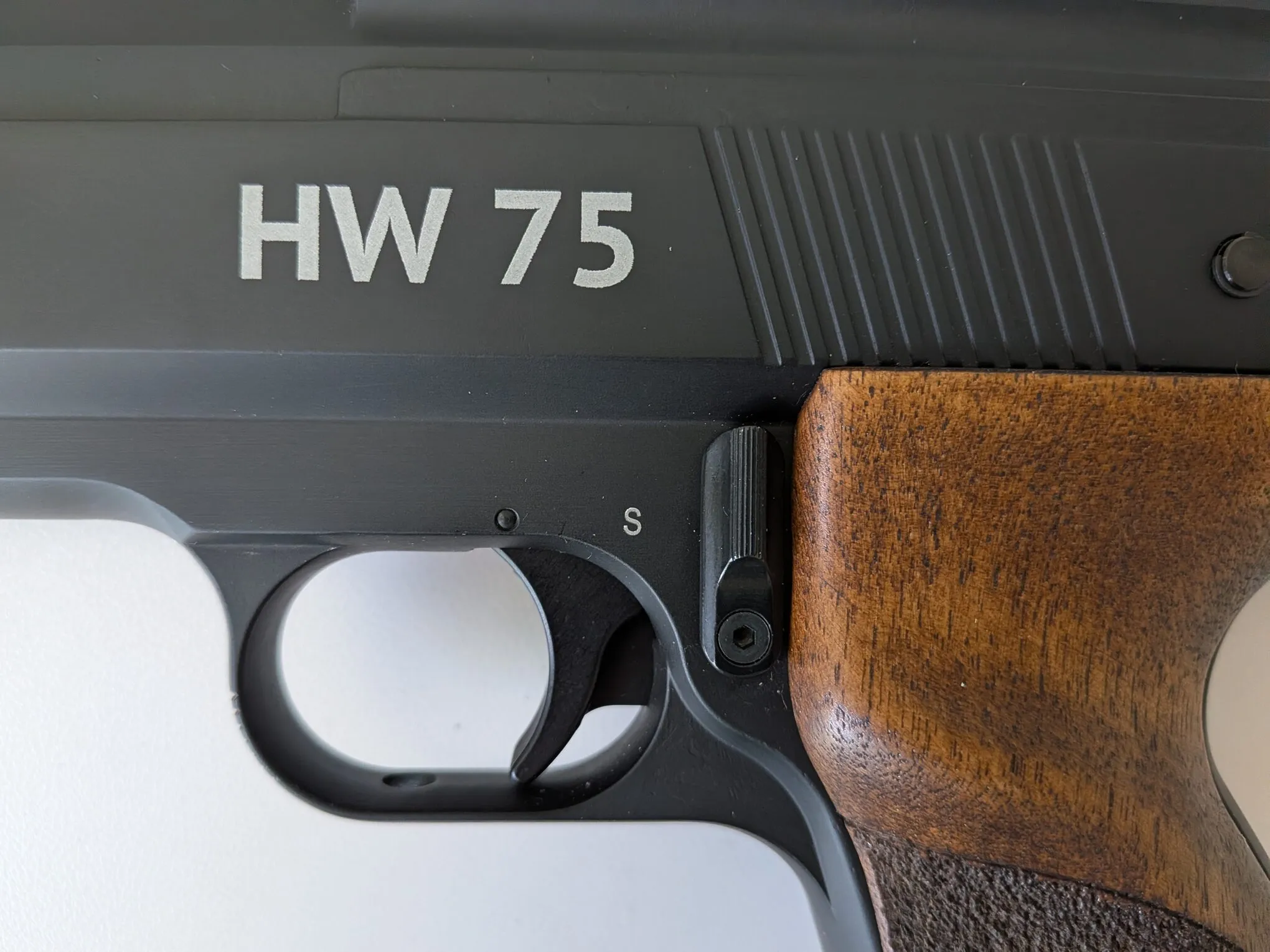
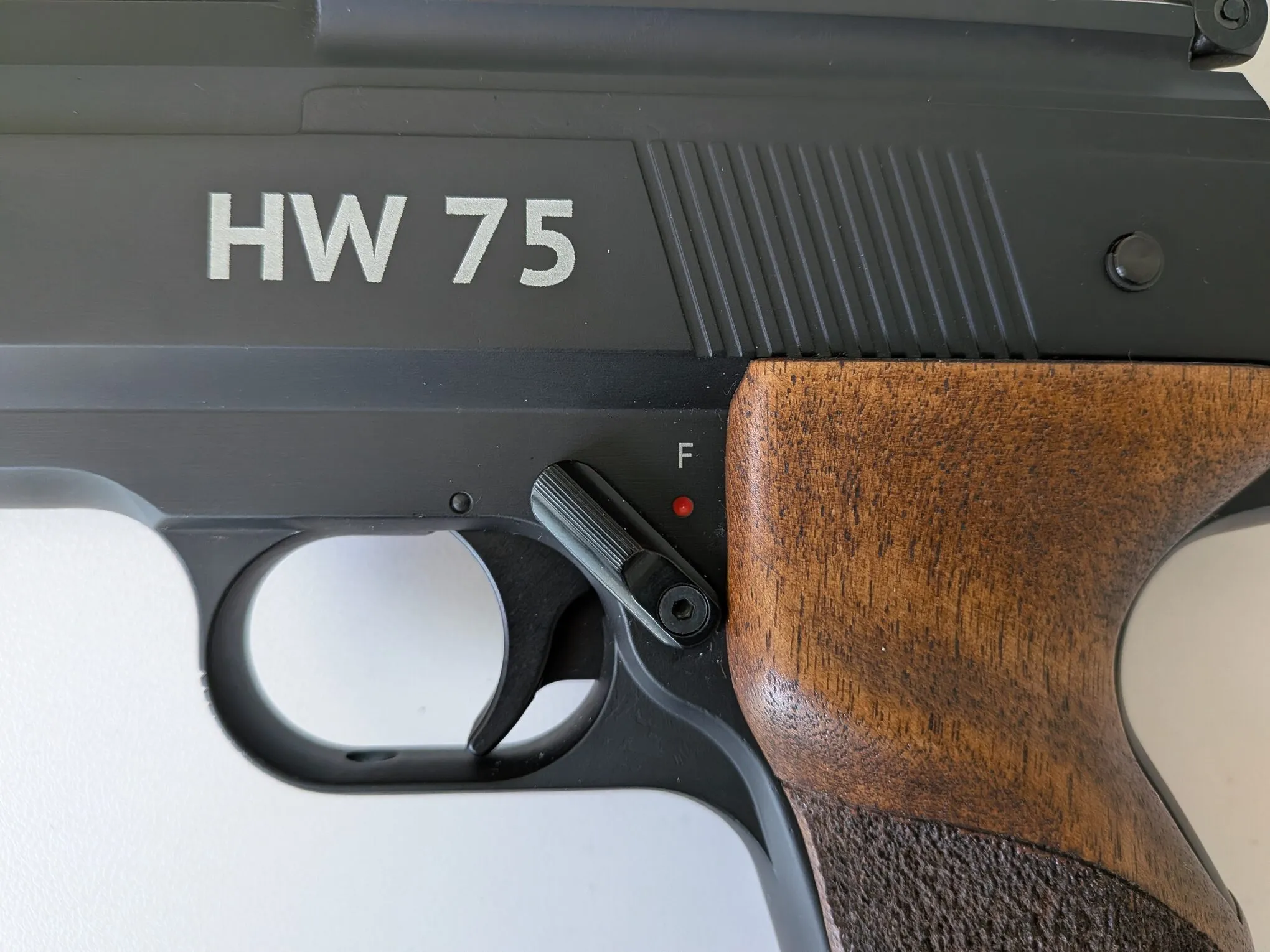
The manual safety sits just behind the trigger, with a lever on each side. These close-ups show safe on the left and fire on the right, where the red dot is visible.
Alongside the HW45 and HW40
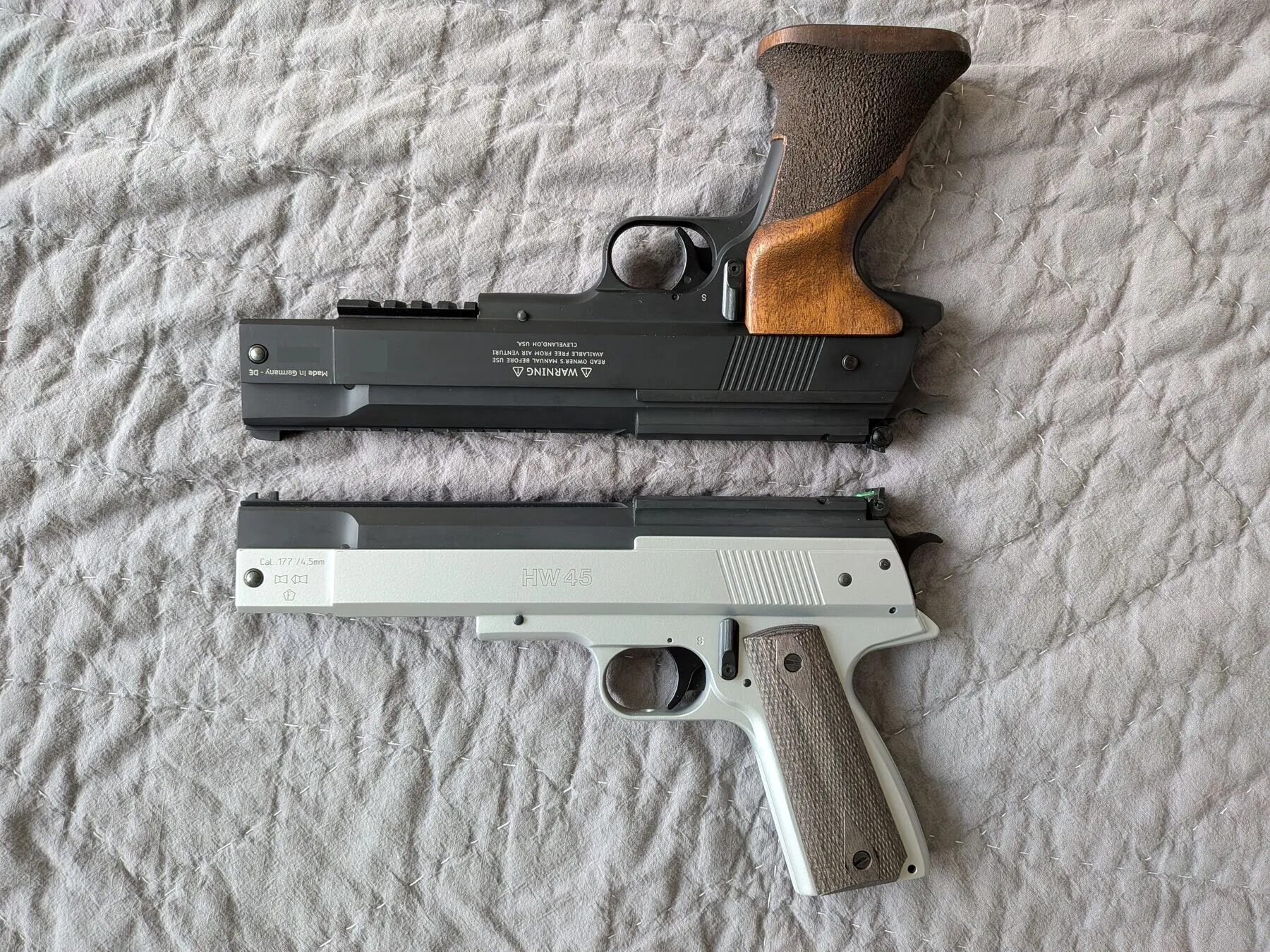
The HW45 and HW75 frames look almost identical externally, especially around the upper assembly and trigger guard. The grips and rear controls are clearer differences. Inside, the HW45 uses a spring-piston action, while the HW75 uses compressed air. Their similar appearance hides a very different firing cycle.
The HW40 is closer mechanically: it also uses a single compression stroke. Its polymer exterior gives it a different character, and Weihrauch lists it at 780 g, compared with the HW75’s 1,060 g. The HW75’s appeal is easy to feel in its weight, metalwork, and wood grip.
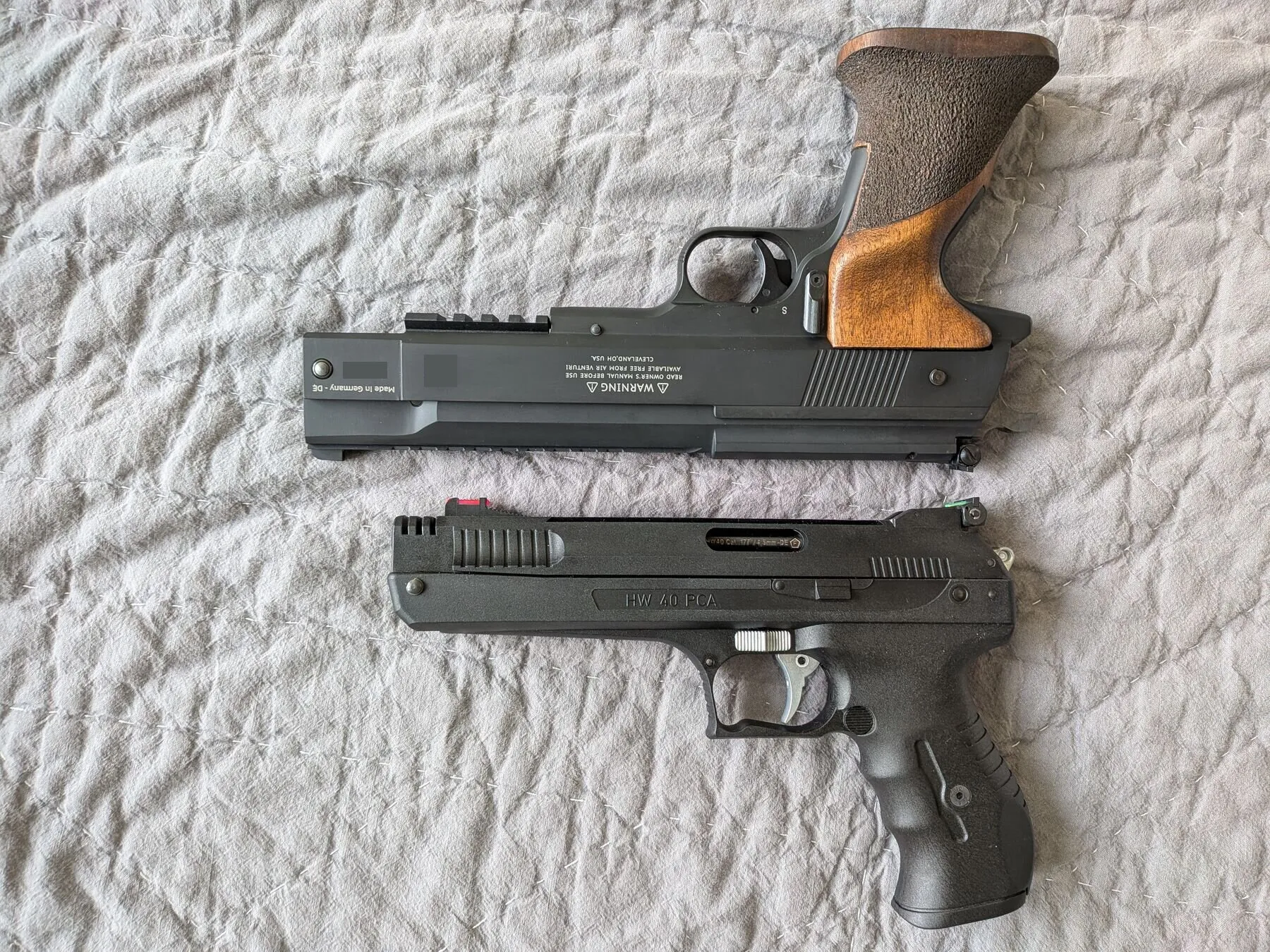
Shooting Experiences
The separate hammer and manual safety give the HW75 a routine that reminds me of a traditional firearm. Each shot involves a few distinct steps, giving the shooting session a deliberate pace.
- Release the upper assembly. Hold it securely just behind the rear sight, then press the small metal release lever beside the hammer forward.
- Open it fully and load. Swing the upper assembly all the way up and forward. Insert one .177 pellet into the exposed breech, with its skirt flush with the barrel end.
- Close and compress. Bring the upper assembly back down and press it fully closed until the latch engages. This return stroke compresses the air.
- Cock the hammer. Pull the hammer backward until it catches.
- Disengage the safety when ready to fire. Align the sights on the target, then press the trigger.
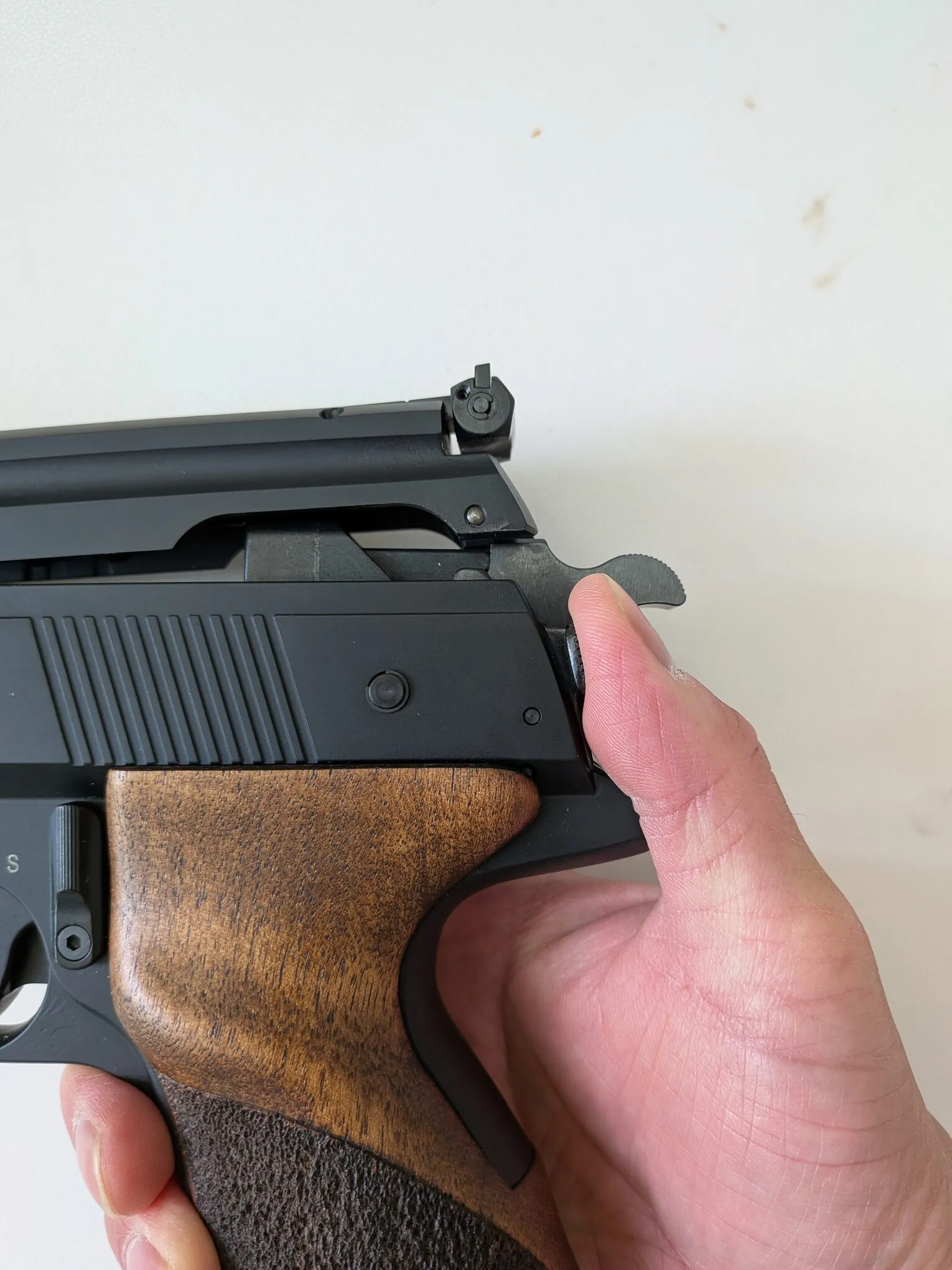
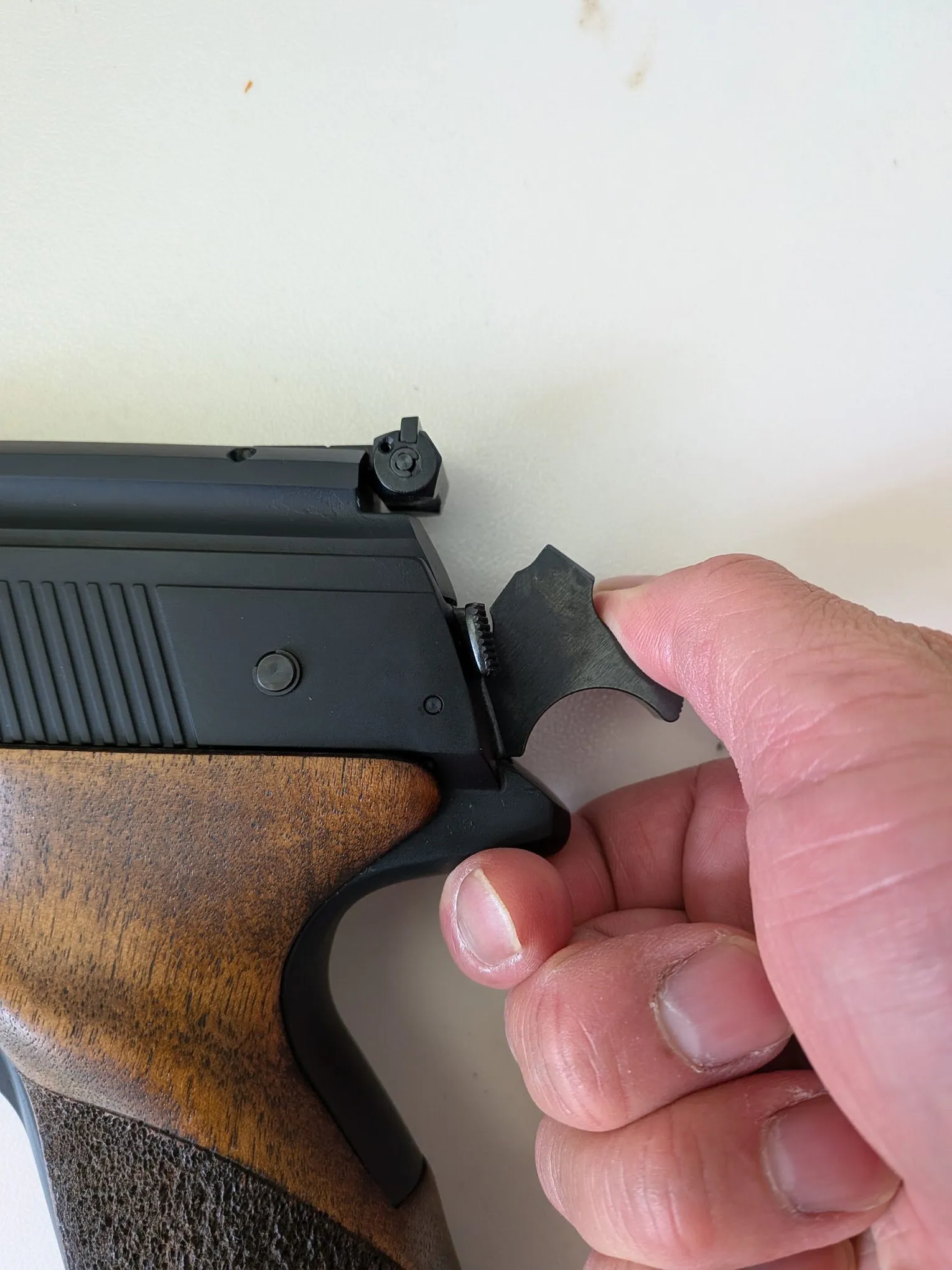
During shooting sessions, I notice more vibration from the HW75 than from other SSP pistols I’ve used, such as the HW40, V10, and FAS 6004. I suspect the impact of its relatively heavy hammer may contribute to this, making the firing action feel more like that of a traditional firearm.
The HW75 feels capable of accurate shooting. The barrel sits relatively high above my hand, so I pay attention to keeping my hold consistent. This reflects how the pistol handles for me.
Sight Picture
The metal rear sight feels solid. Its narrow notch gives me a tight sight picture, with little visible space on either side of the front blade. I personally find a wider notch easier to read.
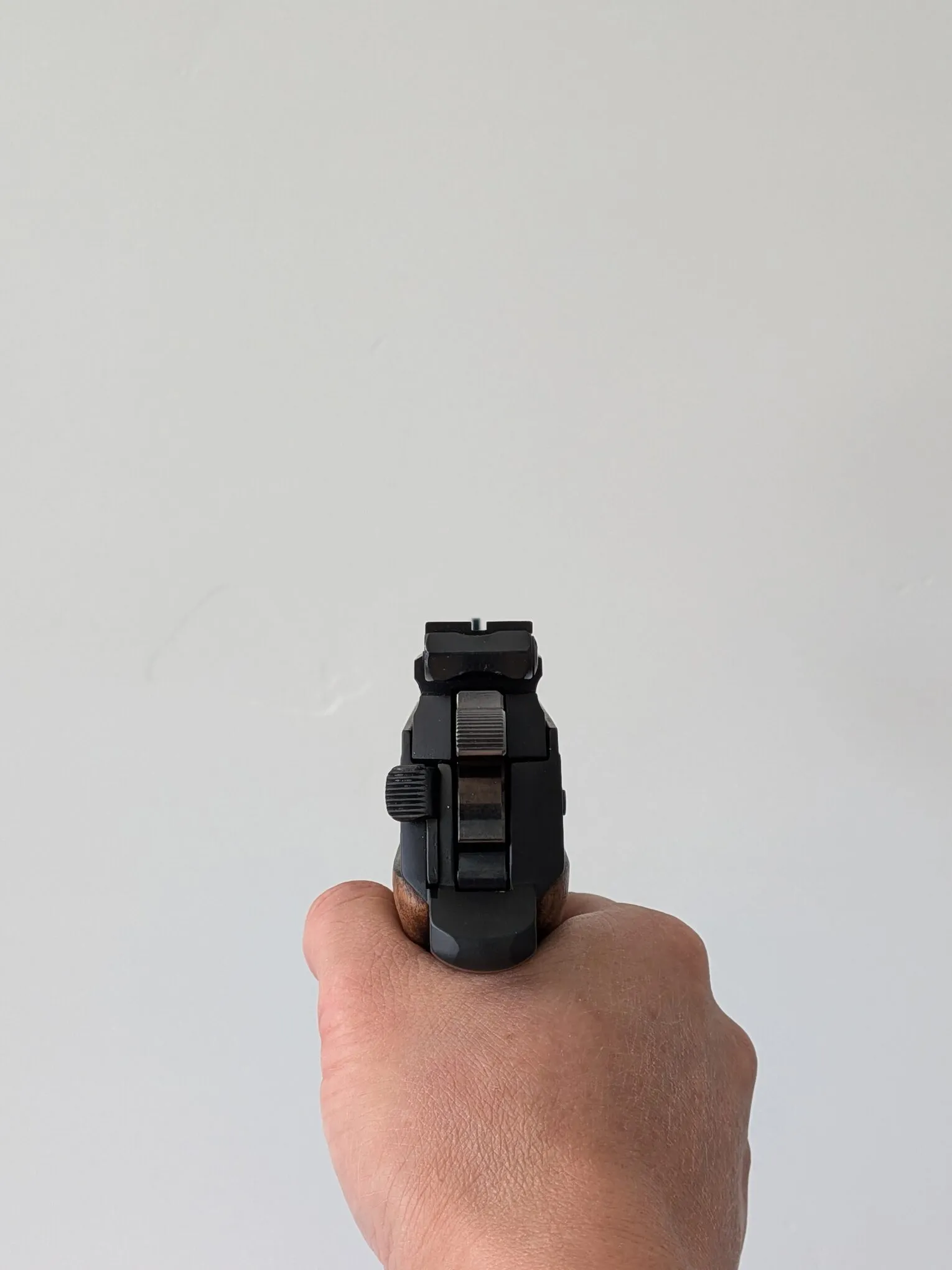
Lighting also affects the sight picture. Under strong light, the sloped upper surface can catch a reflection and reduce contrast around the notch. The photo below shows this clearly, with the surface appearing almost white. (This applies to almost all the HW air pistols)
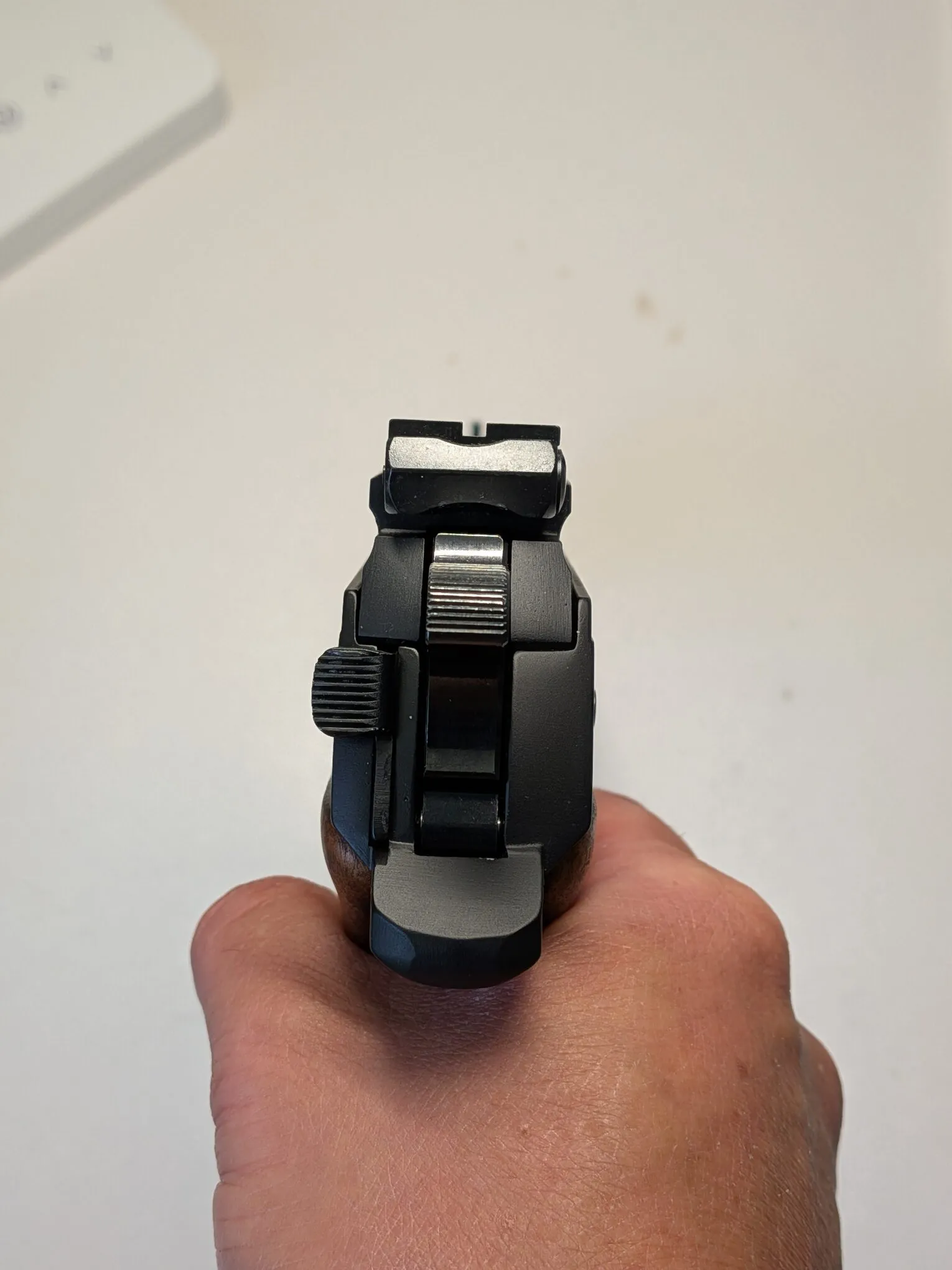
For comparison, I describe the sight picture I prefer in my FAS 6004 shooting impressions.
Grips
The walnut grip feels well made. Its textured surface provides good friction without feeling too rough.
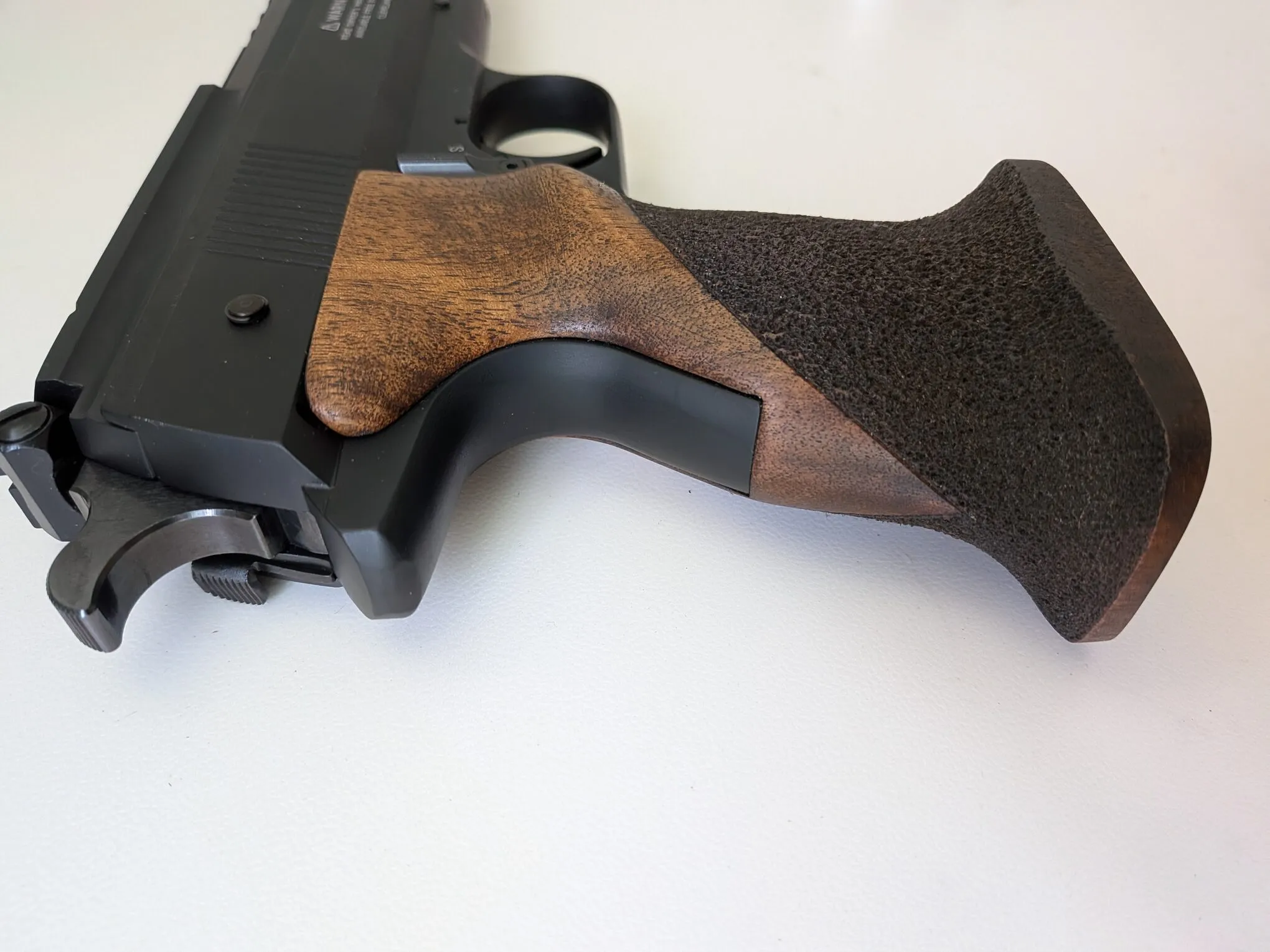
For my hand, the grip is a little slim at the web between my thumb and index finger. I find myself using more pressure from the other three fingers to steady the pistol. A fuller shape in that area may suit my hold better.
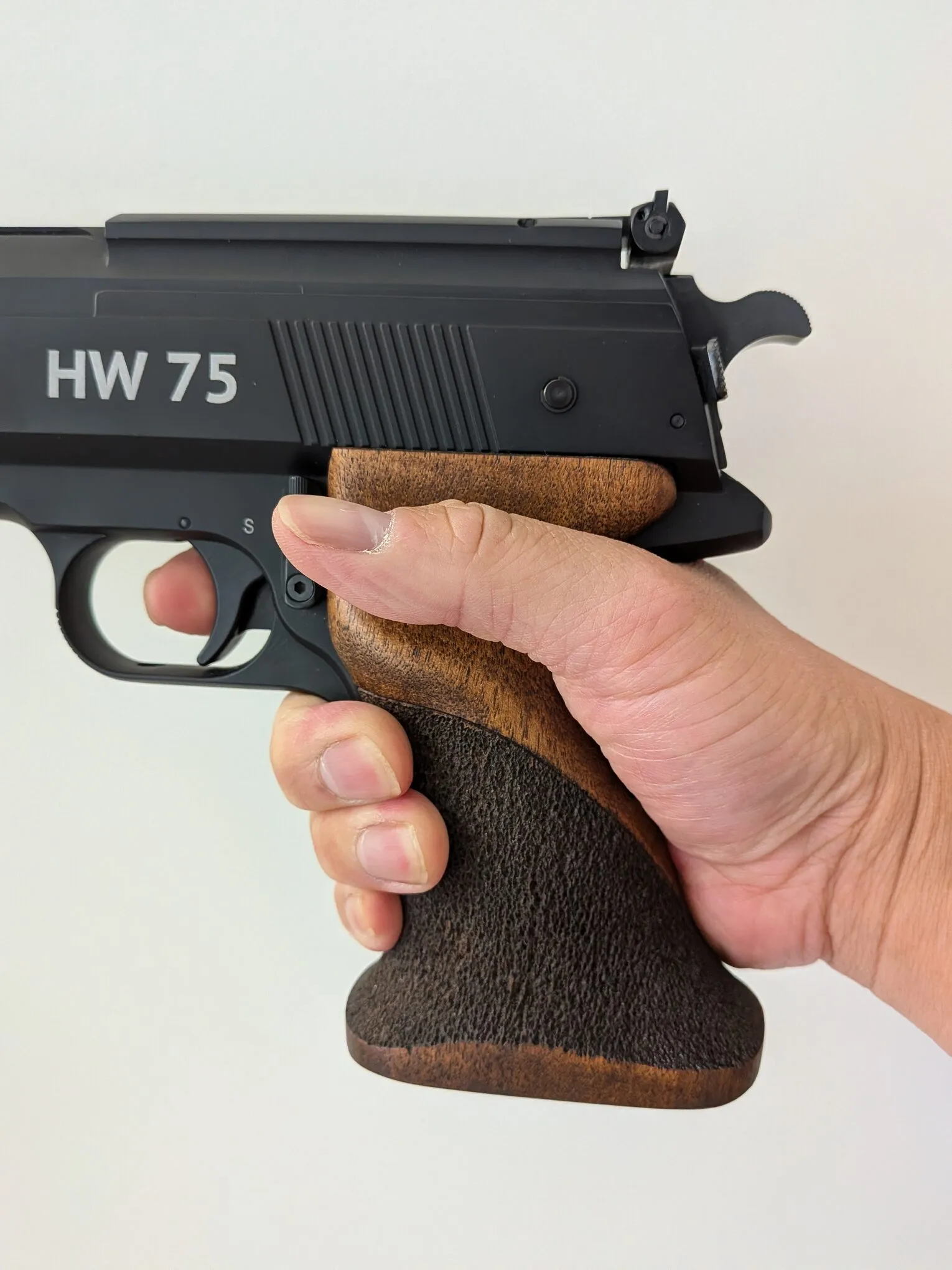
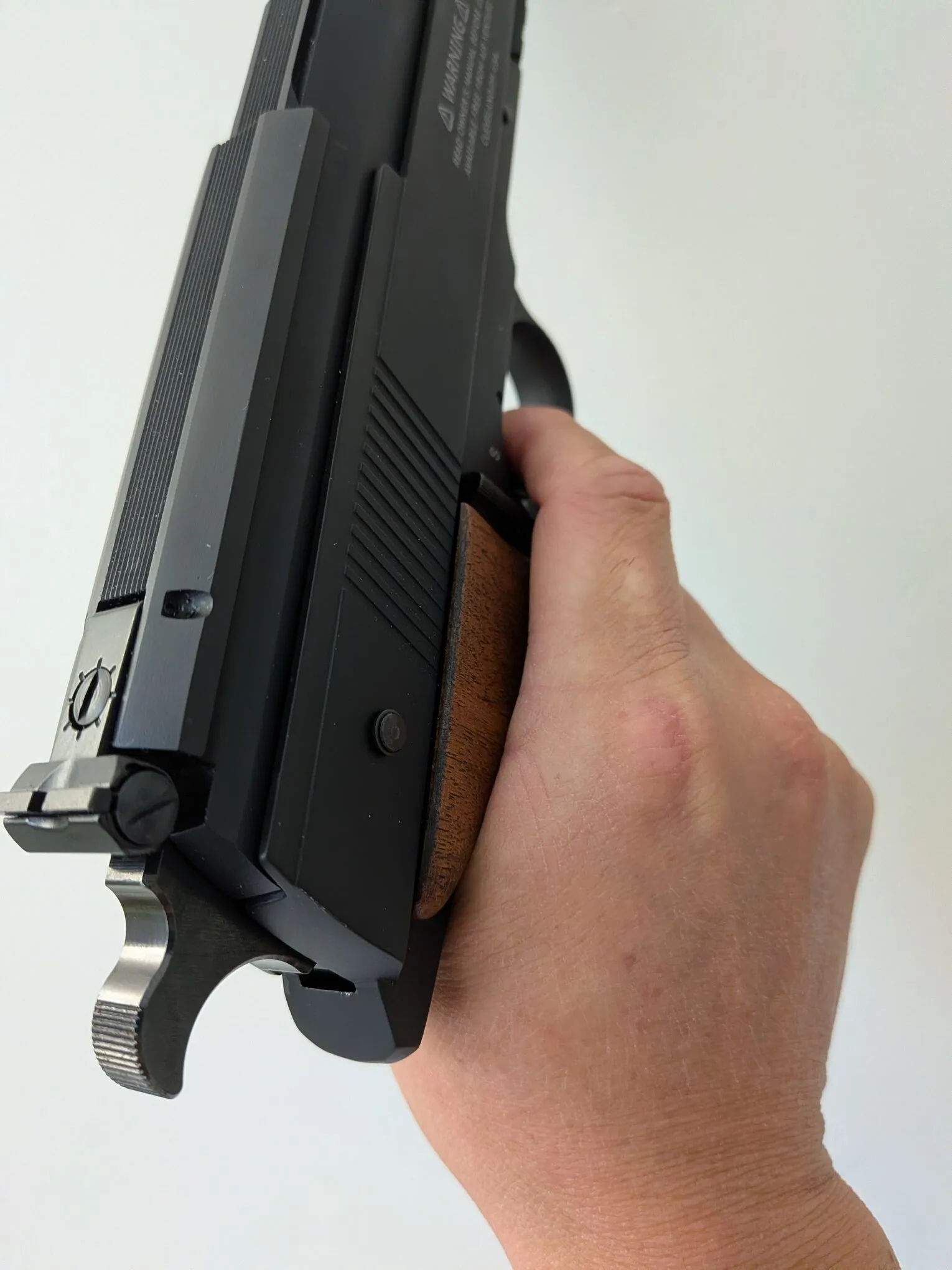
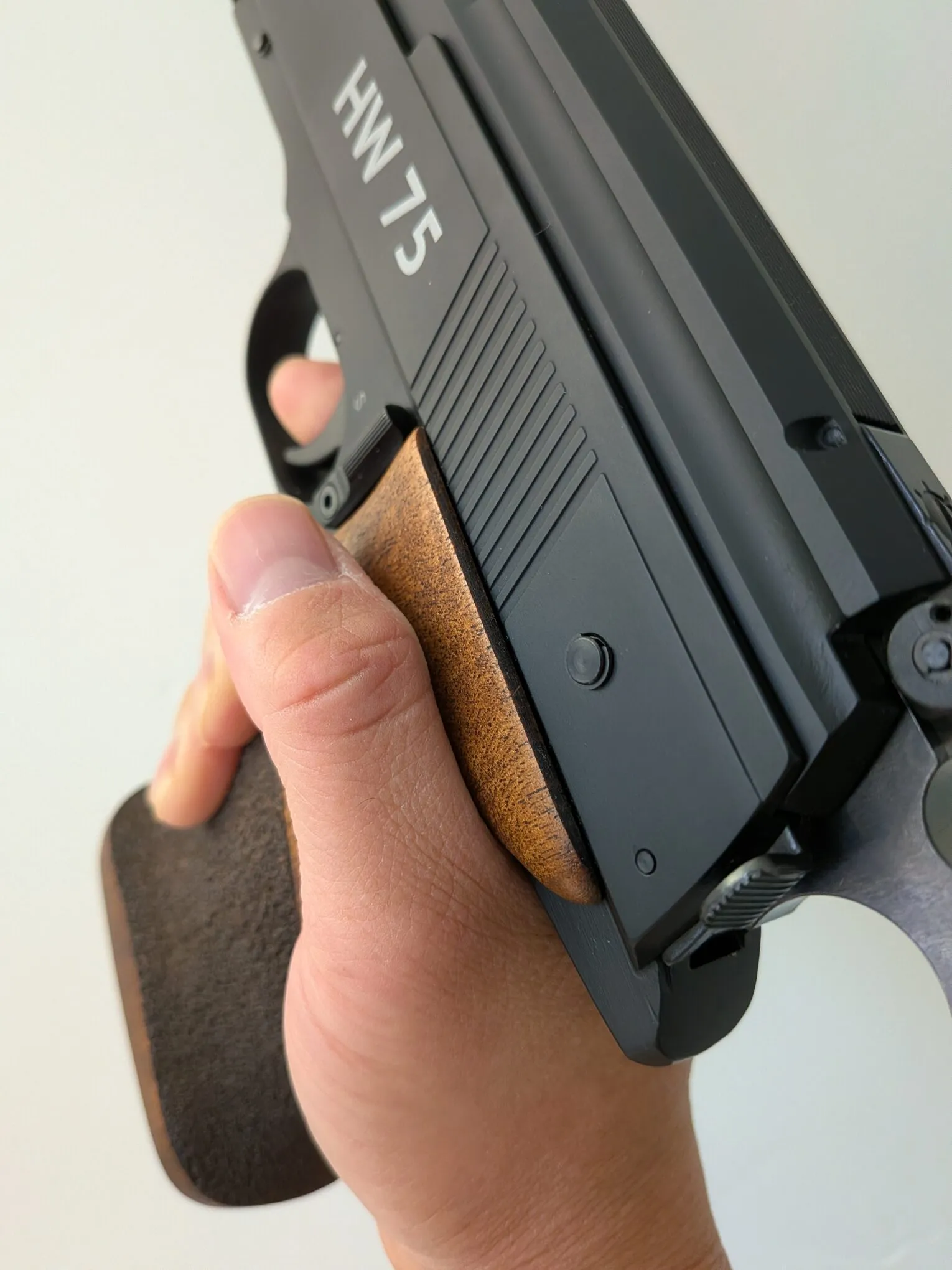
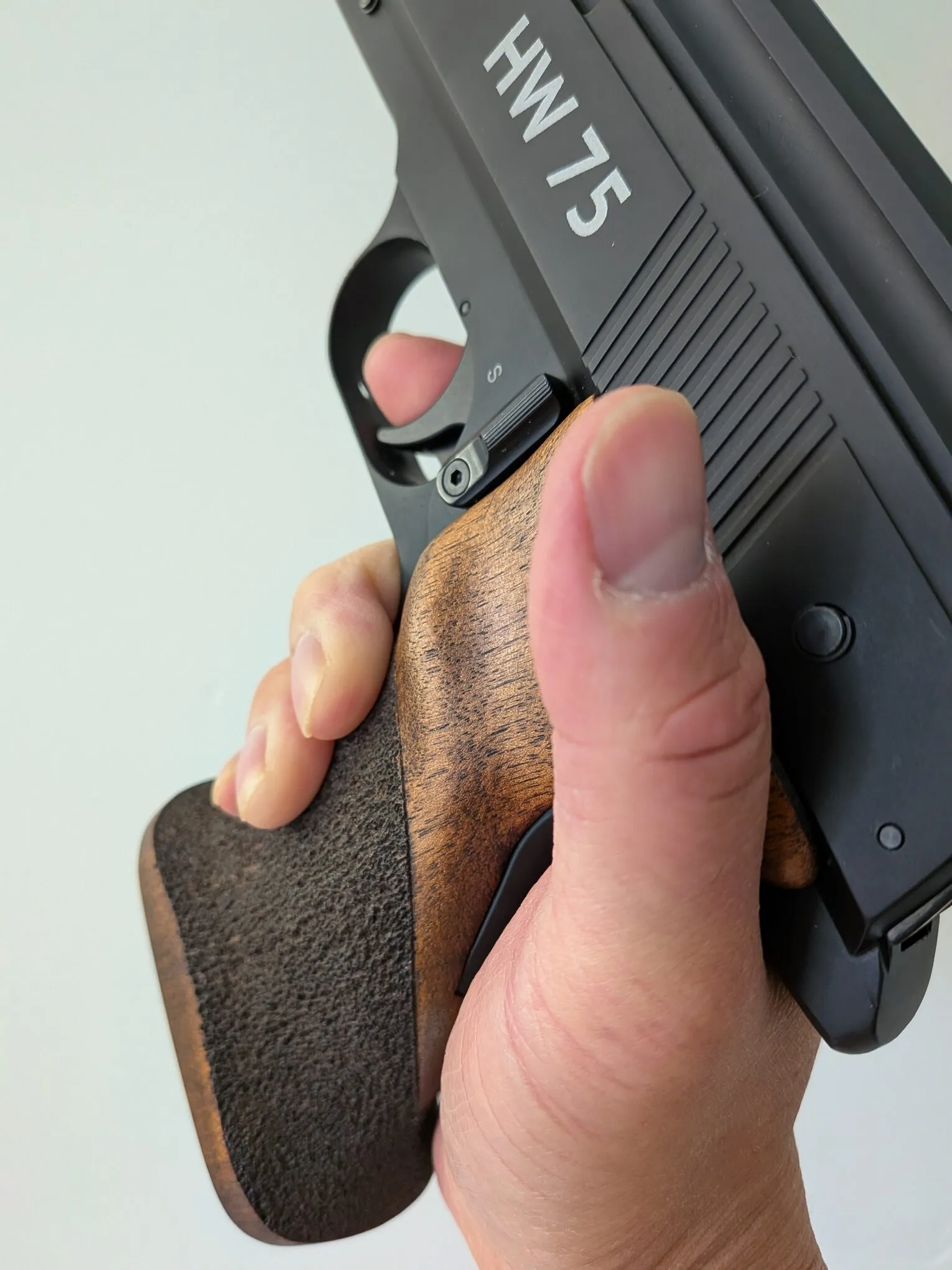
I’ve ordered a Rink universal grip to explore that fit, though I haven’t tried it yet.
Trigger-Guard Undercut
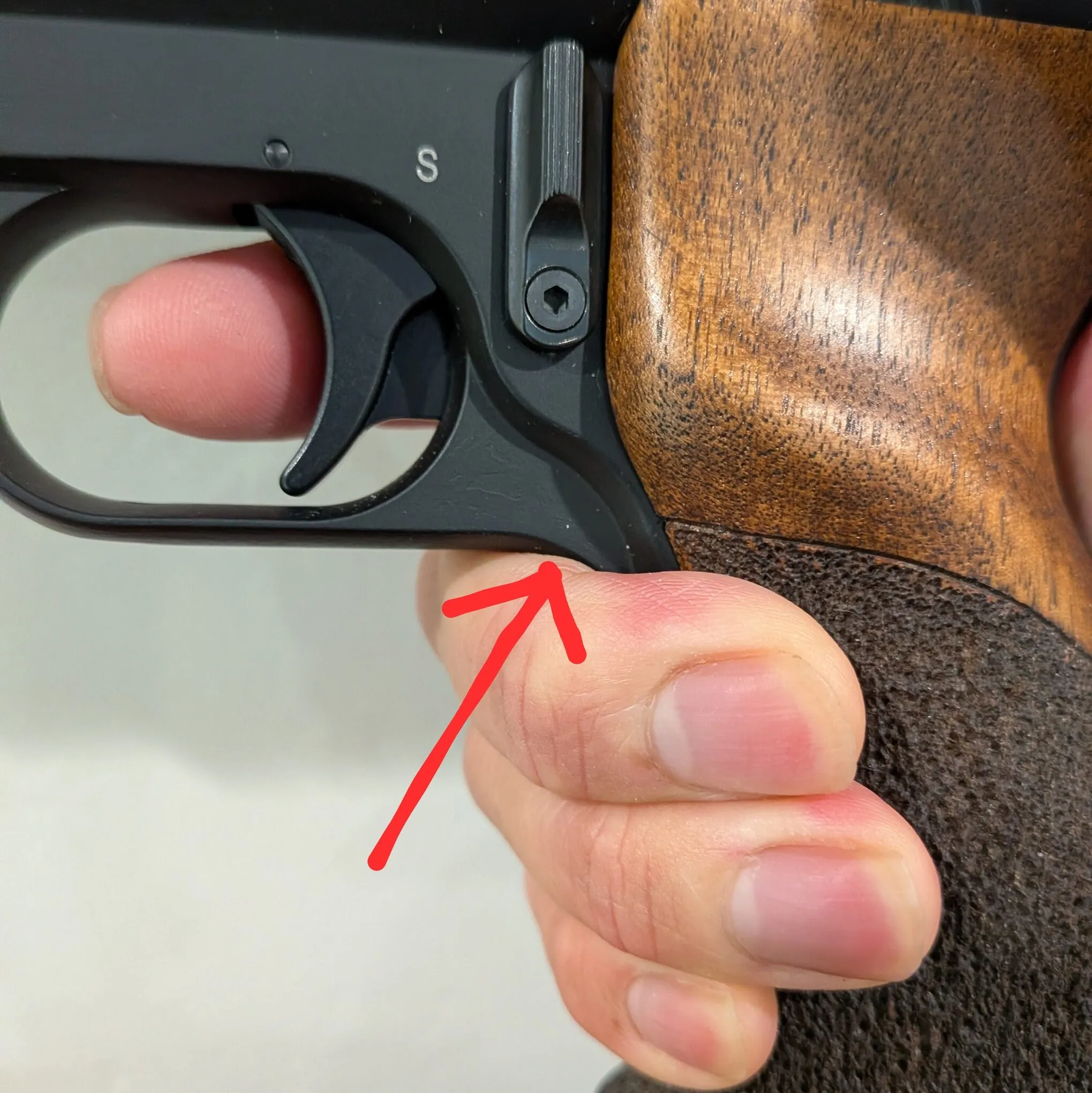
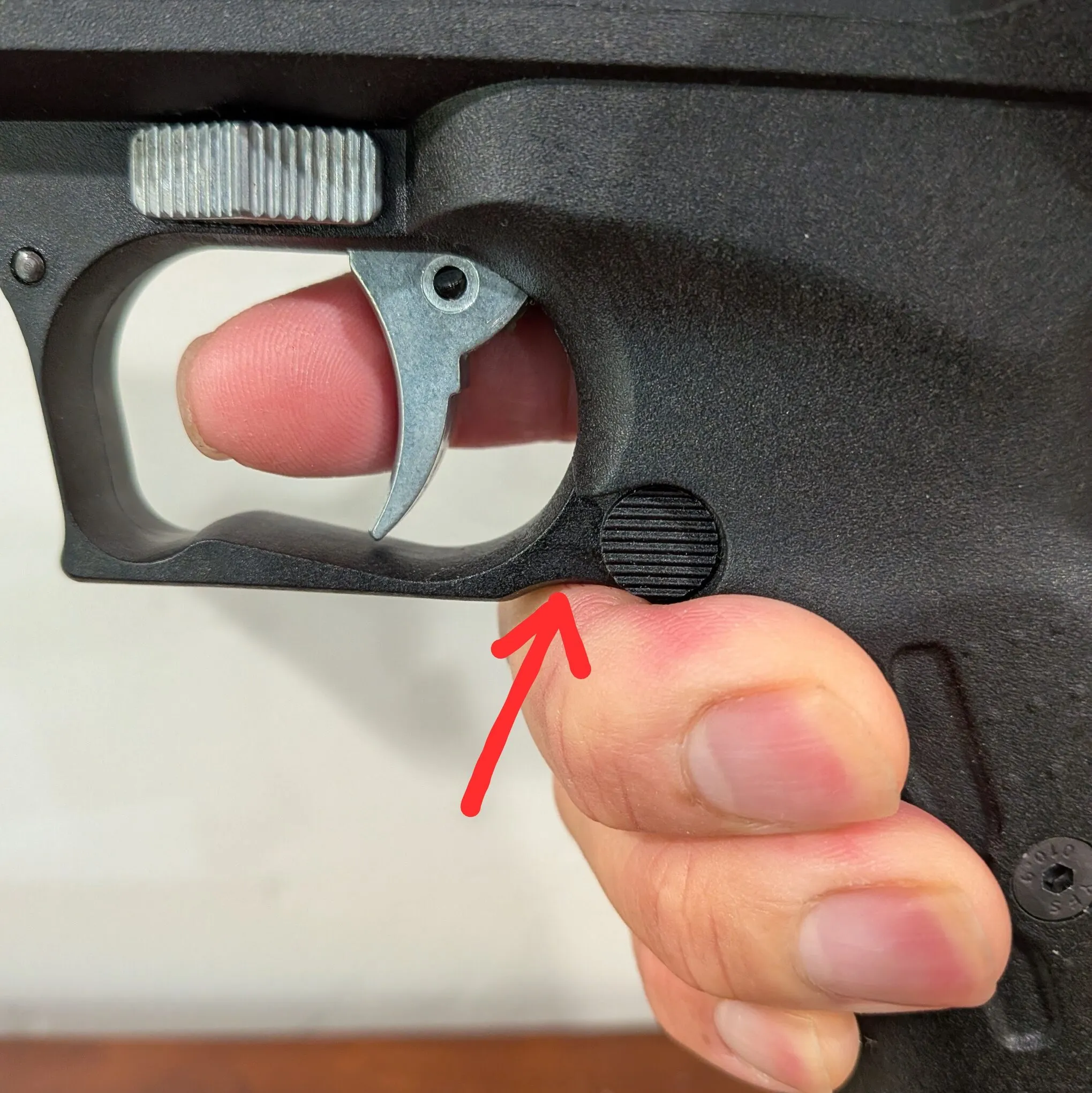
The trigger-guard undercut also affects how the HW75 sits in my hand. The underside where the guard meets the grip is flat (just like the 1911 pistols), without the upward curve of the HW40. Because the HW75’s grip does not give my hand enough support, I feel my middle finger taking most of the pistol’s weight. The flat undercut keeps the pistol sitting higher on that finger, making my hold feel a little unstable.
The red arrows in the photos below highlight this contact area: the HW75’s flatter contour on the left and the HW40’s upward curve on the right.
Muzzle Velocity
Starting with a cold bore, I recorded 25 shots with a Garmin Xero chronograph.
| Measurement | Full session (shots 1–25) | Shots 8–25 |
|---|---|---|
| Shots recorded | 25 | 18 |
| Average velocity | 430.1 fps | 431.6 fps |
| Minimum velocity | 421.8 fps | 424.8 fps |
| Maximum velocity | 434.7 fps | 434.7 fps |
| Extreme spread | 12.9 fps | 9.9 fps |
| Standard deviation (population) | 3.50 fps | 2.54 fps |
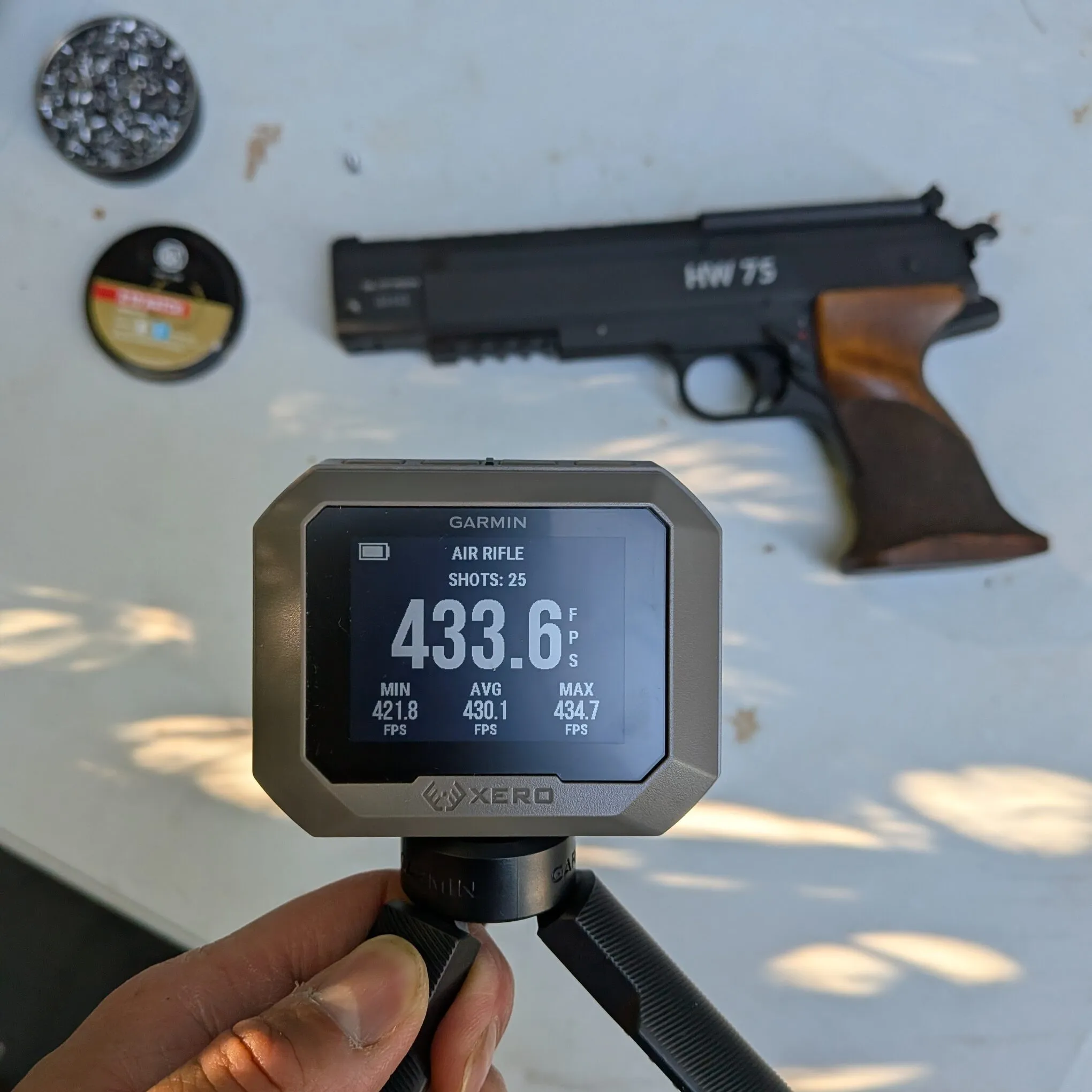
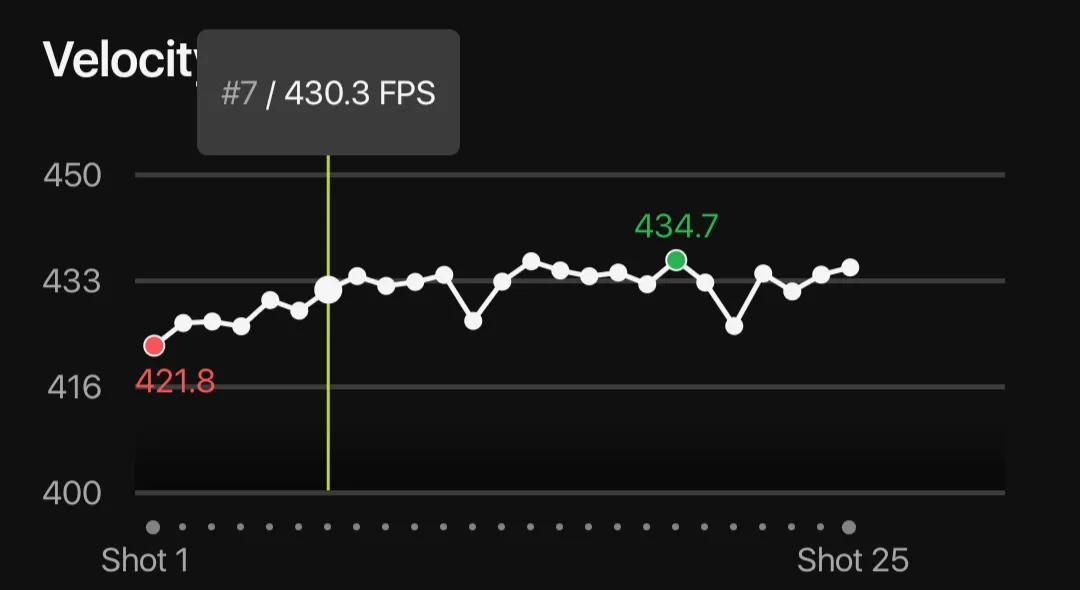
Although the extreme spread across the full session was 12.9 fps, I noticed that the velocity became more stable after the first 7–8 shots, settling around 430 fps. The graph below shows the lower initial readings and the more consistent later shots, with a few dips.
My take so far
Its build quality, substantial weight, accuracy potential, two-stage match trigger, adjustable sights, and match-like walnut grip give it many qualities I associate with a match pistol.
However, to me, the separate safety and hammer add steps to each shot, while the rear sight’s narrow notch and reflections, together with the grip fit, may make a consistent shooting routine harder to find. Taken together, these details make it feel less suitable for serious competition for my own use. Even so, I still think the HW75 is a very good air pistol. I appreciate its craftsmanship and character, and it has plenty to offer for enjoyable, unhurried target shooting.
References
- Dimensions and features come from Weihrauch’s HW75 specifications.
- Velocity is the figure in its 2025 catalog.
- HW75 manual