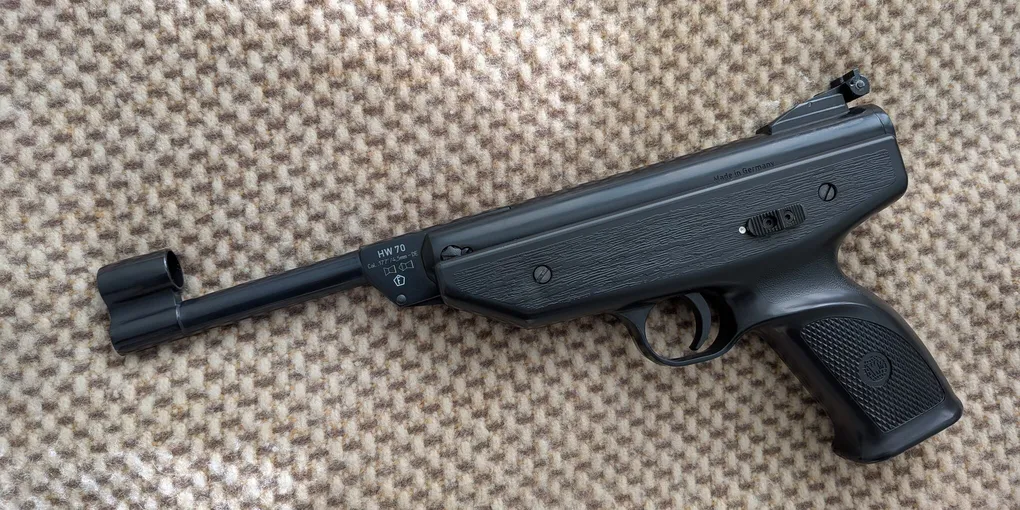
HW70A Air Pistol Review
A Brief Introduction
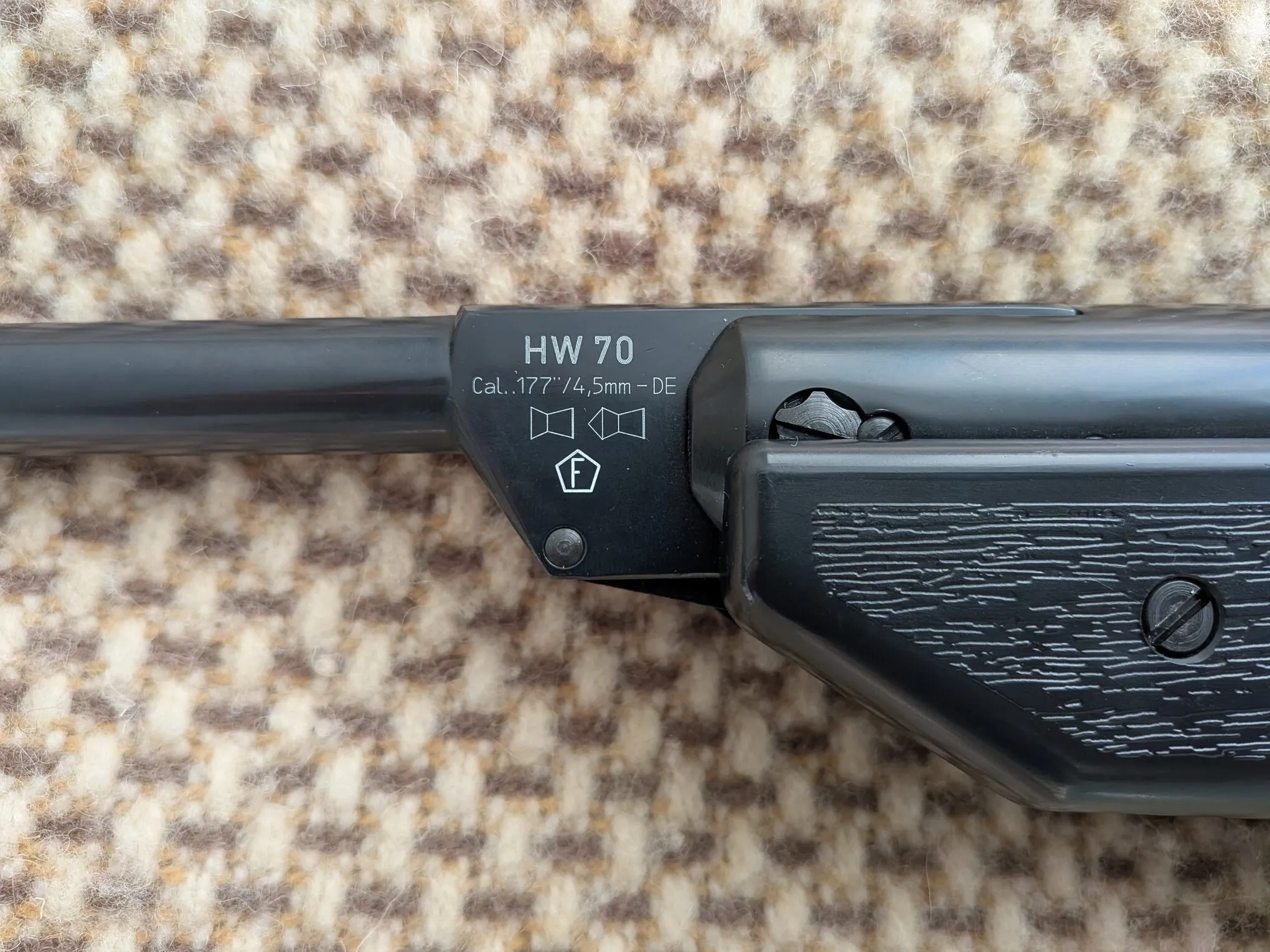
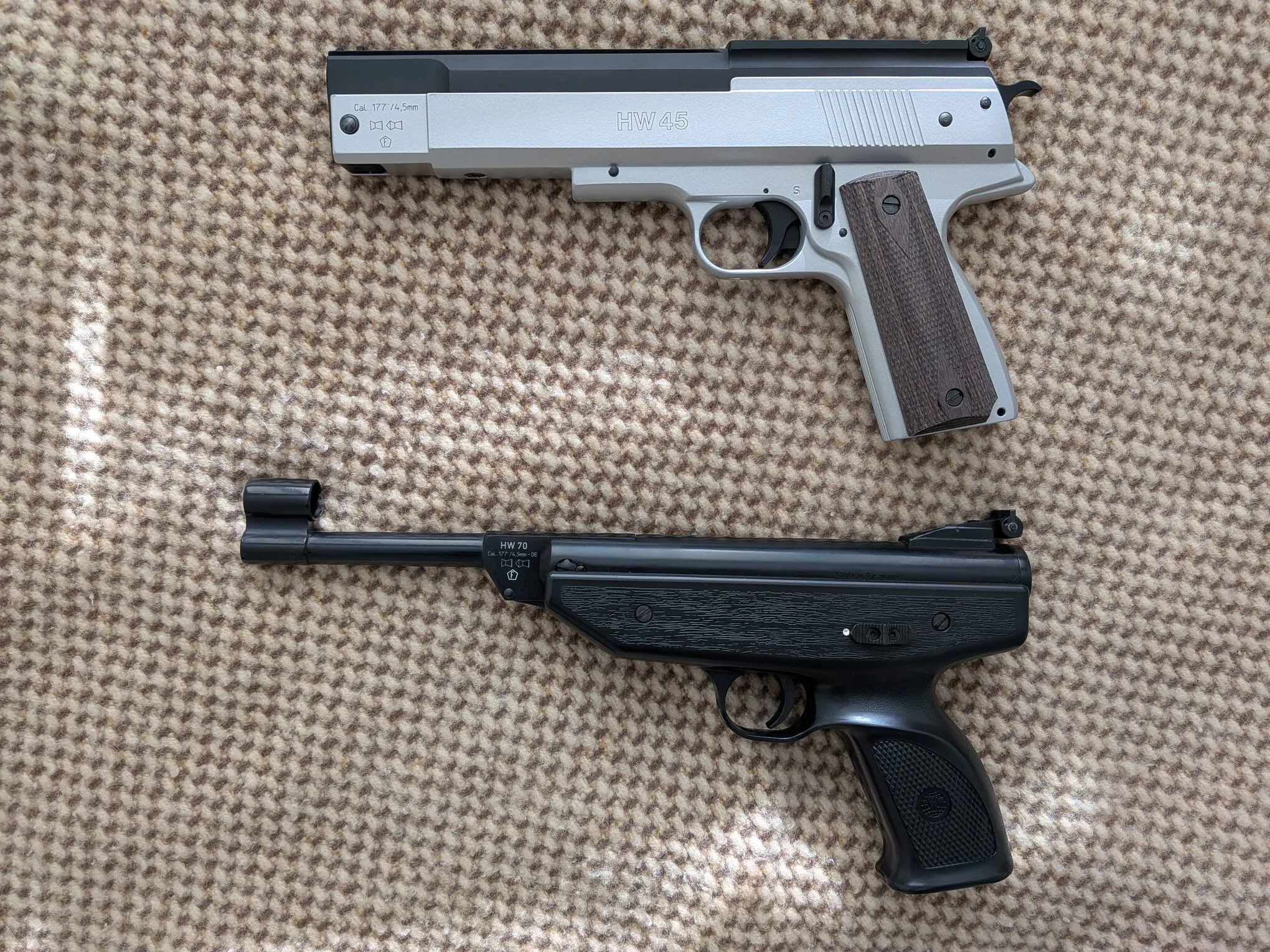
The Weihrauch HW70A looks like a small spring rifle in pistol form. Its long exposed barrel, black synthetic stock, and hooded front sight give it a character of its own beside my HW45 and HW75. The resemblance carries through to the break-barrel action and, for me, the feel of the trigger.
The HW70 family is the only break-barrel design in Weihrauch’s current air-pistol range. Weihrauch lists this model as the HW70, and that is also the marking on mine.
My 15-shot chronograph test averaged 449.3 fps with 7-grain pellets, with good velocity consistency. On target, where I rested the pistol made a considerable difference: supporting the stock worked best, while supporting the barrel worked worst. Those two findings shape my impressions of the HW70A so far.
First Impressions
Appearance and Build
The stock is black synthetic throughout, extending forward beneath the action and forming the grip and trigger guard. Molded texture along the sides and checkering around the grip give it a practical appearance, quite different from the metal frames and wooden grips of the HW45 and HW75.
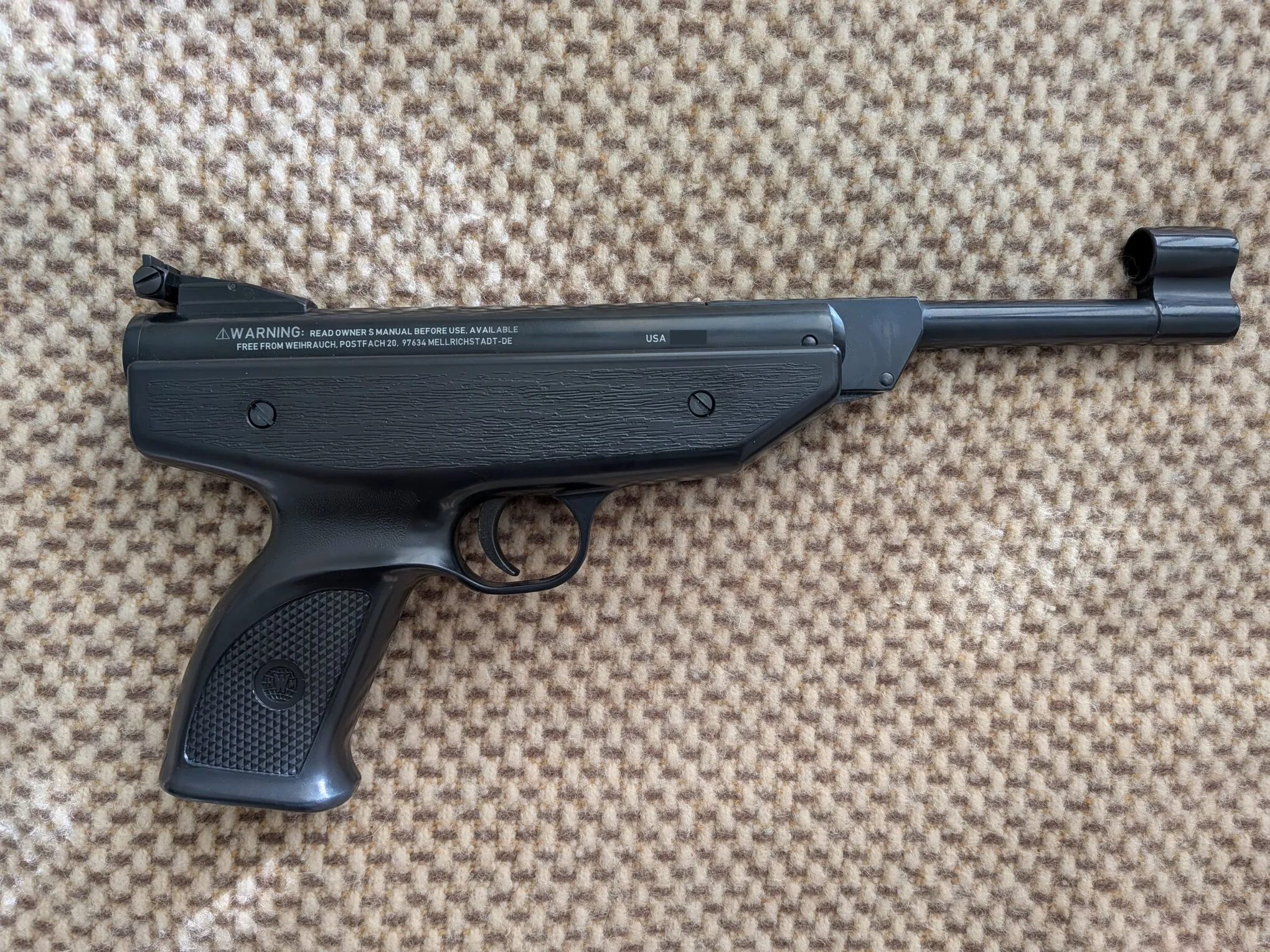
Above the stock, the metal cylinder and slim barrel give the pistol its long, low profile. The angled view below shows how the stock wraps around the lower part of the action.
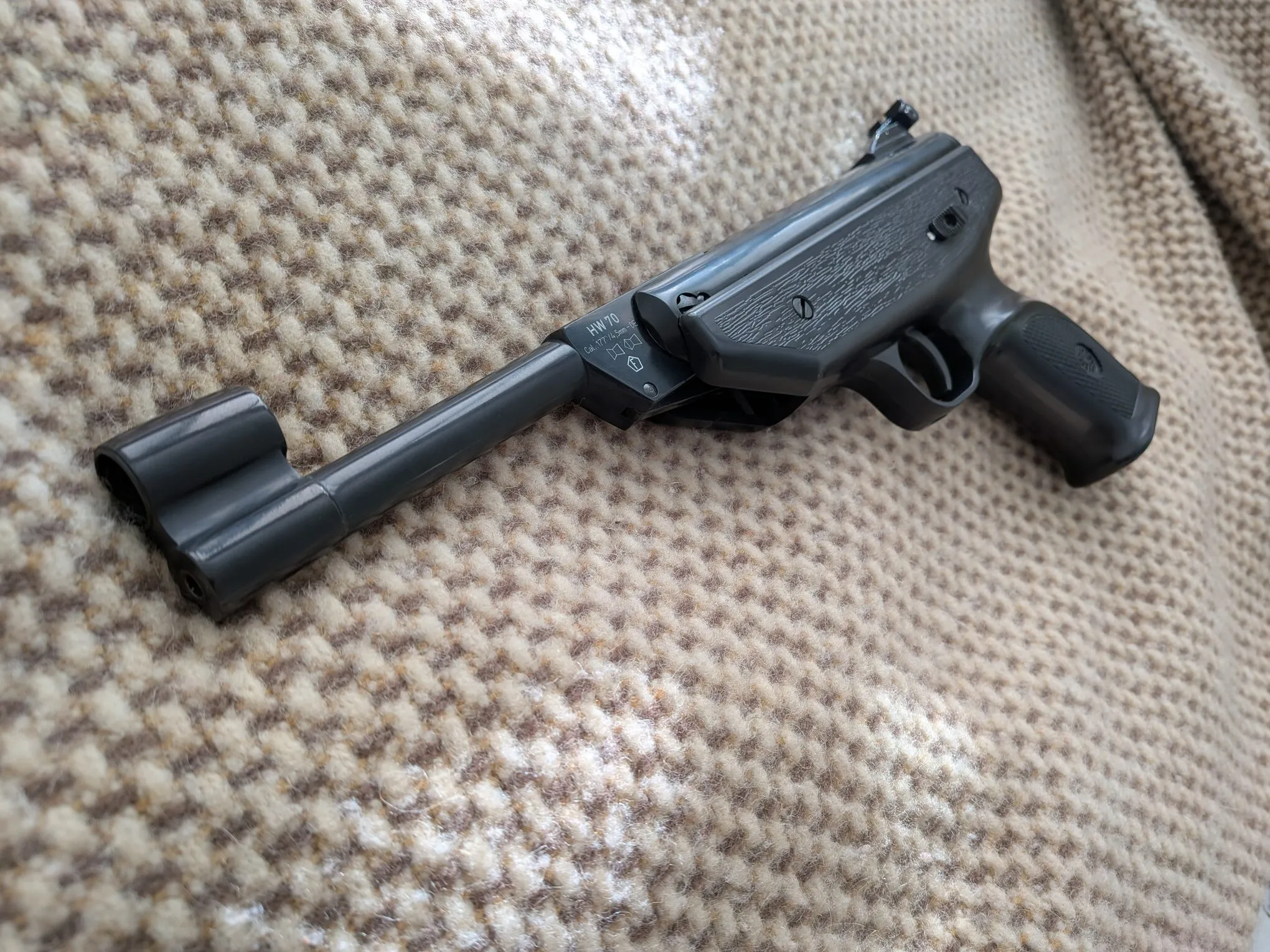
A Protected Front Sight
The front sight blade sits inside a protective ring. This is one of the HW70A’s most distinctive features. After the exposed fiber-optic insert on my HW45 broke, I appreciate having a hood around the front sight.
The ring-shaped sight housing also gives me a larger surface to grasp when cocking, acting as a handle at the end of the short barrel.
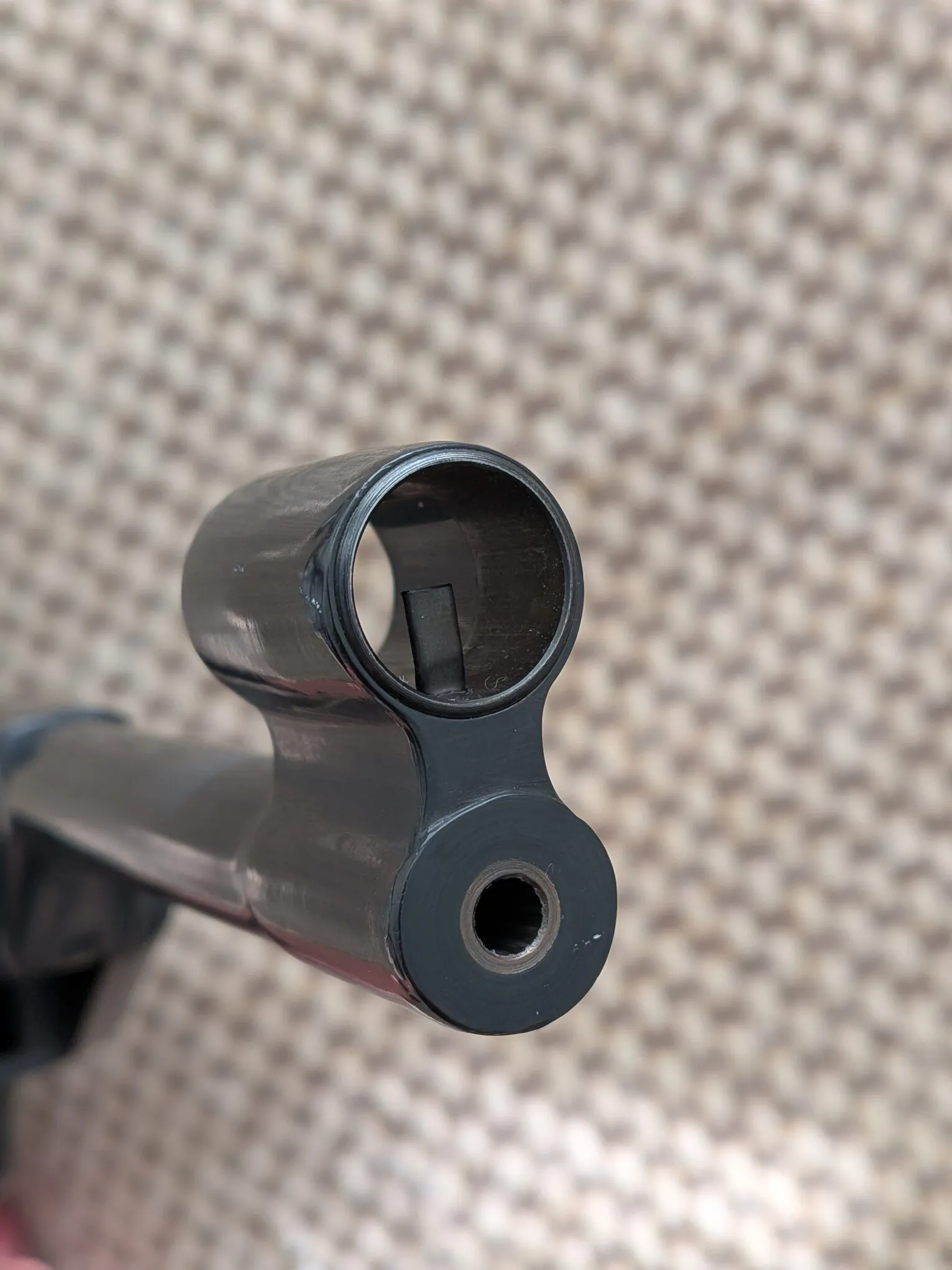
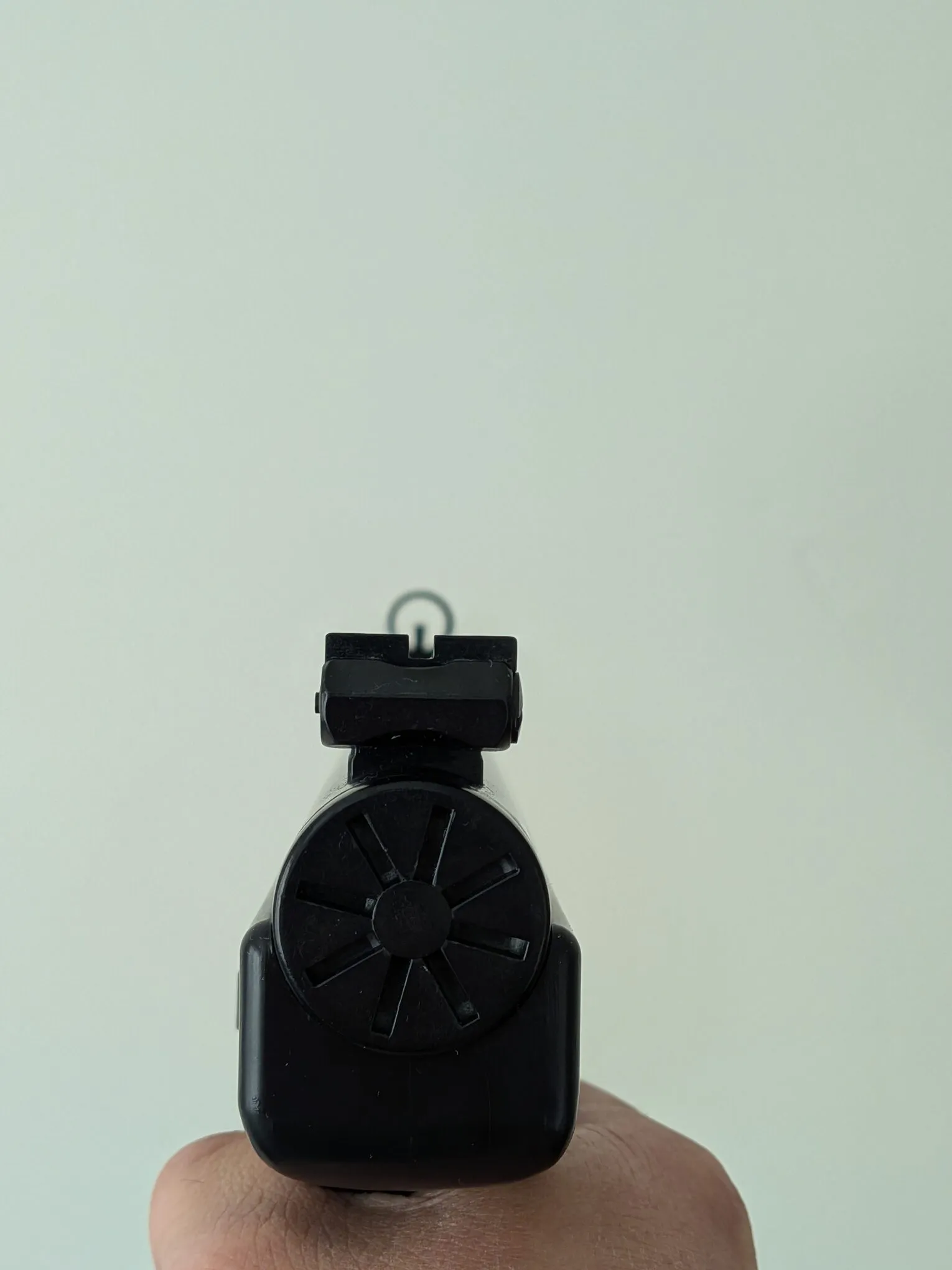
The rear sight adjusts for windage and elevation. The sight picture is a plain black blade and notch, with the front hood visible around the blade.
Break-Barrel Action and Breech
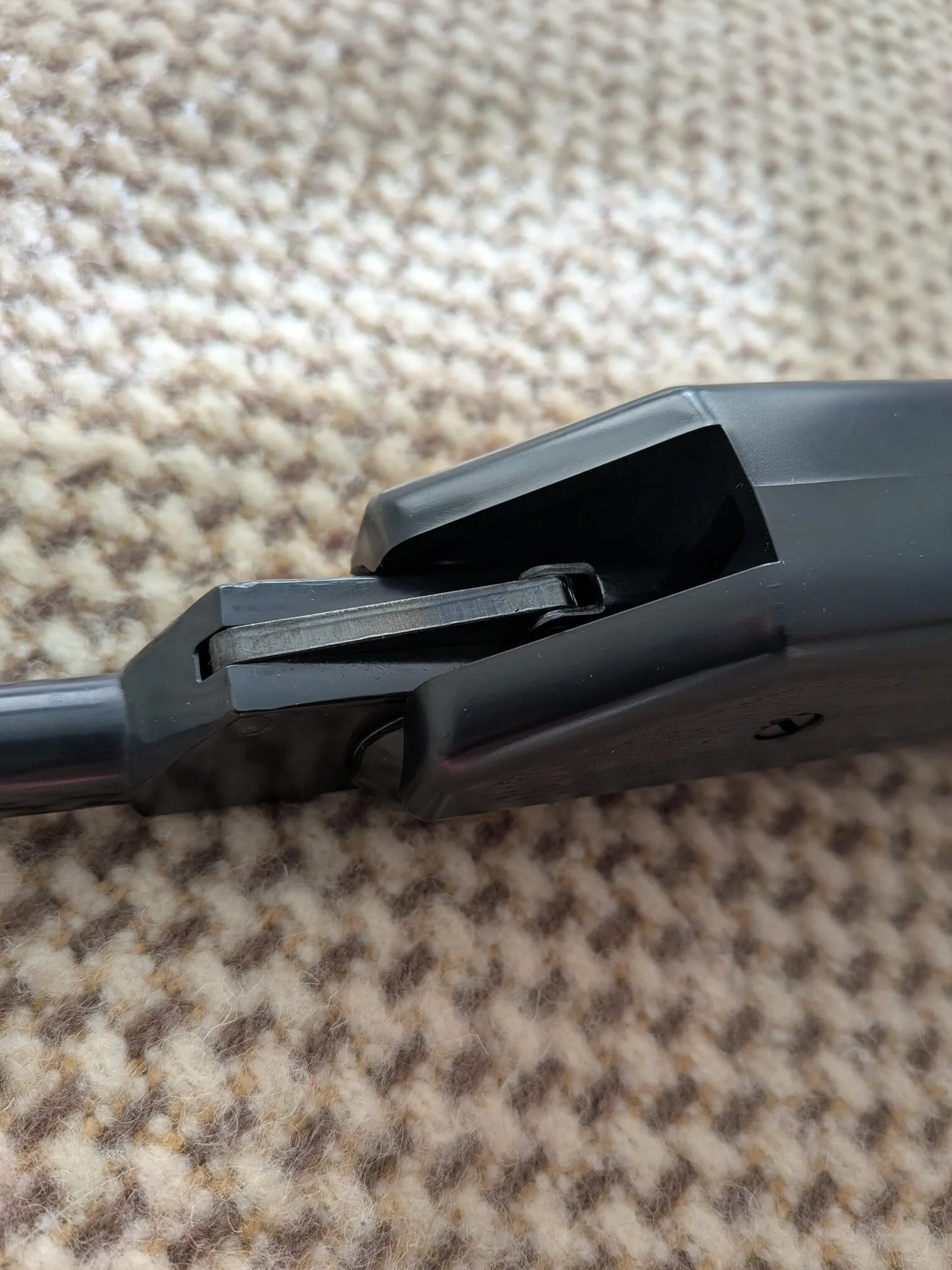
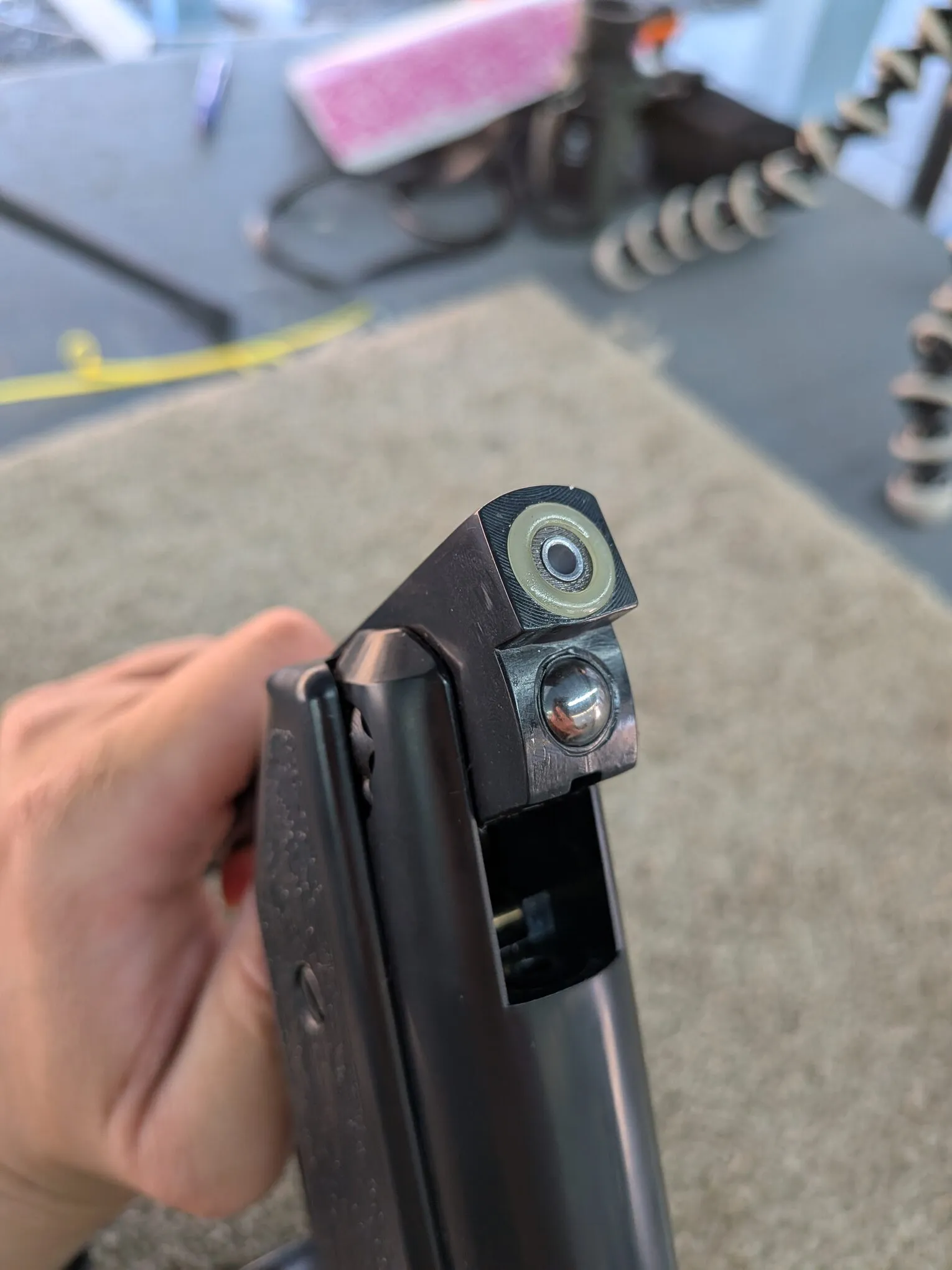
The barrel pivots downward to cock the spring-piston action, exposing the breech for loading. This is a familiar layout from Weihrauch’s break-barrel rifles, and quite different from the upper assemblies that swing open on the HW45 and HW75.
The underside photo shows the cocking linkage. With the barrel open, the circular breech seal and the rounded locking ball below it are visible (similar to HW30S).
Automatic Safety
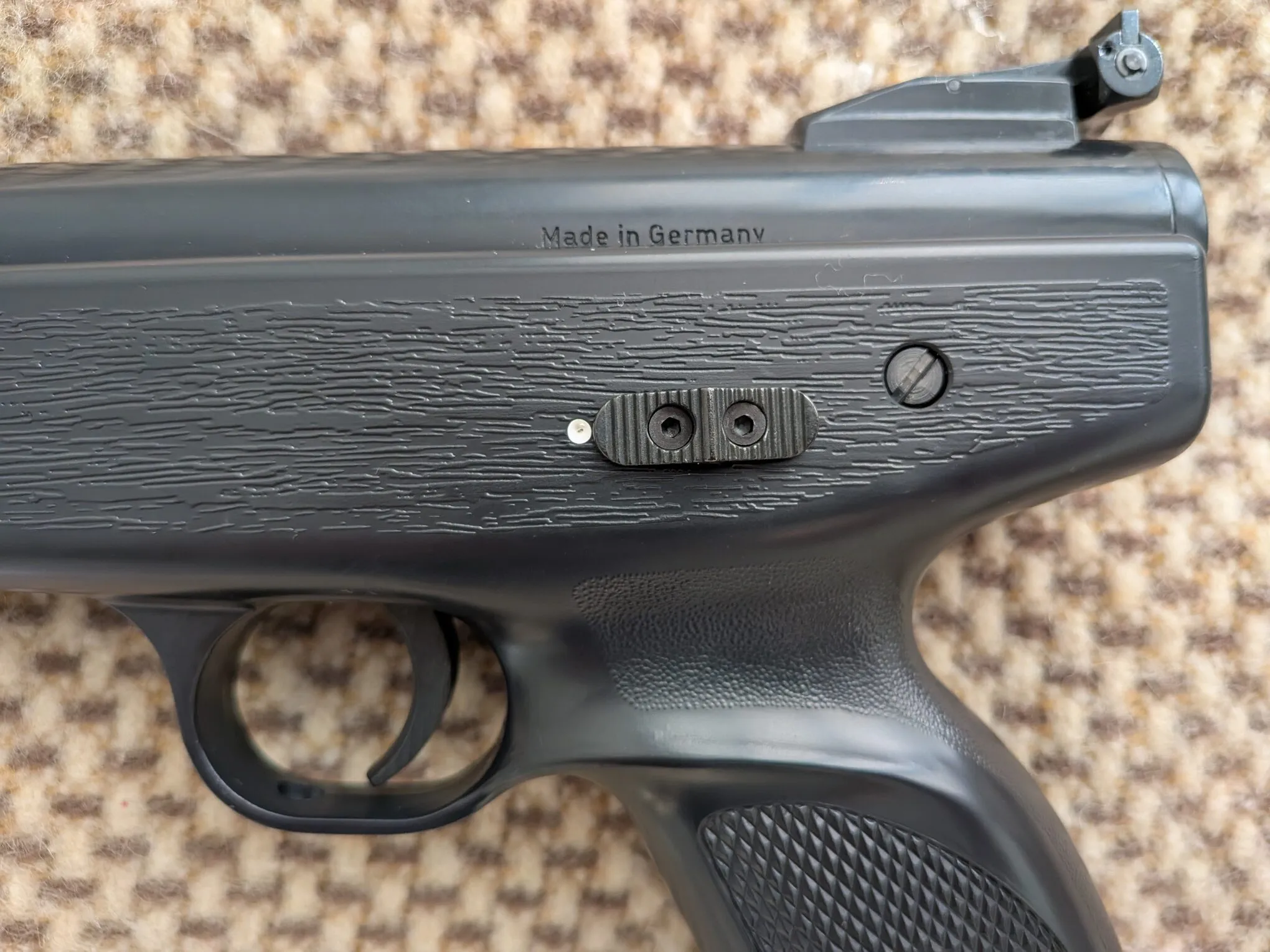
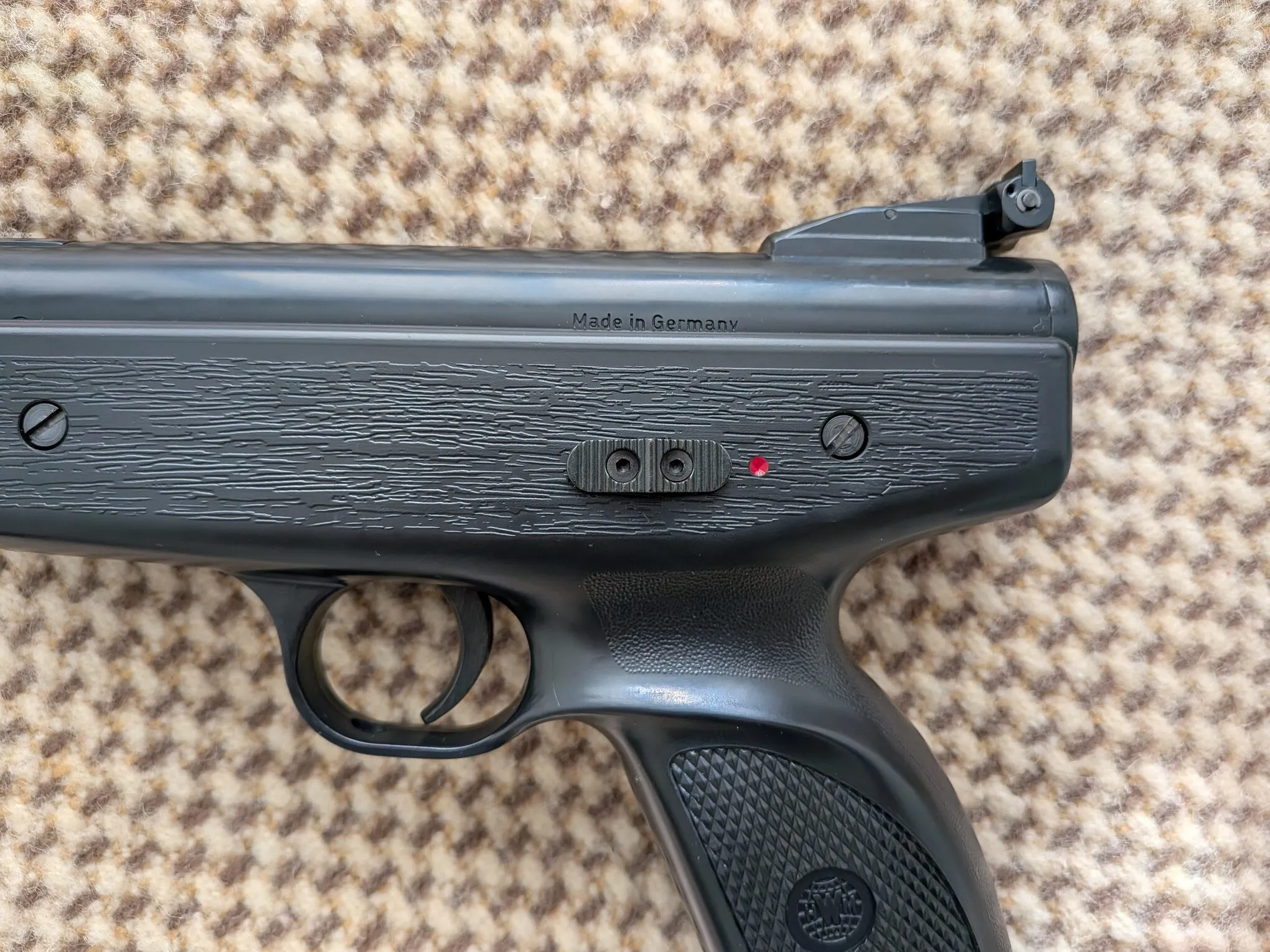
The safety is a sliding control on the left side of the stock. According to the HW70 manual, it engages automatically during cocking. The rearward position exposes the white mark; moving it forward exposes the red mark.
Polymer Trigger
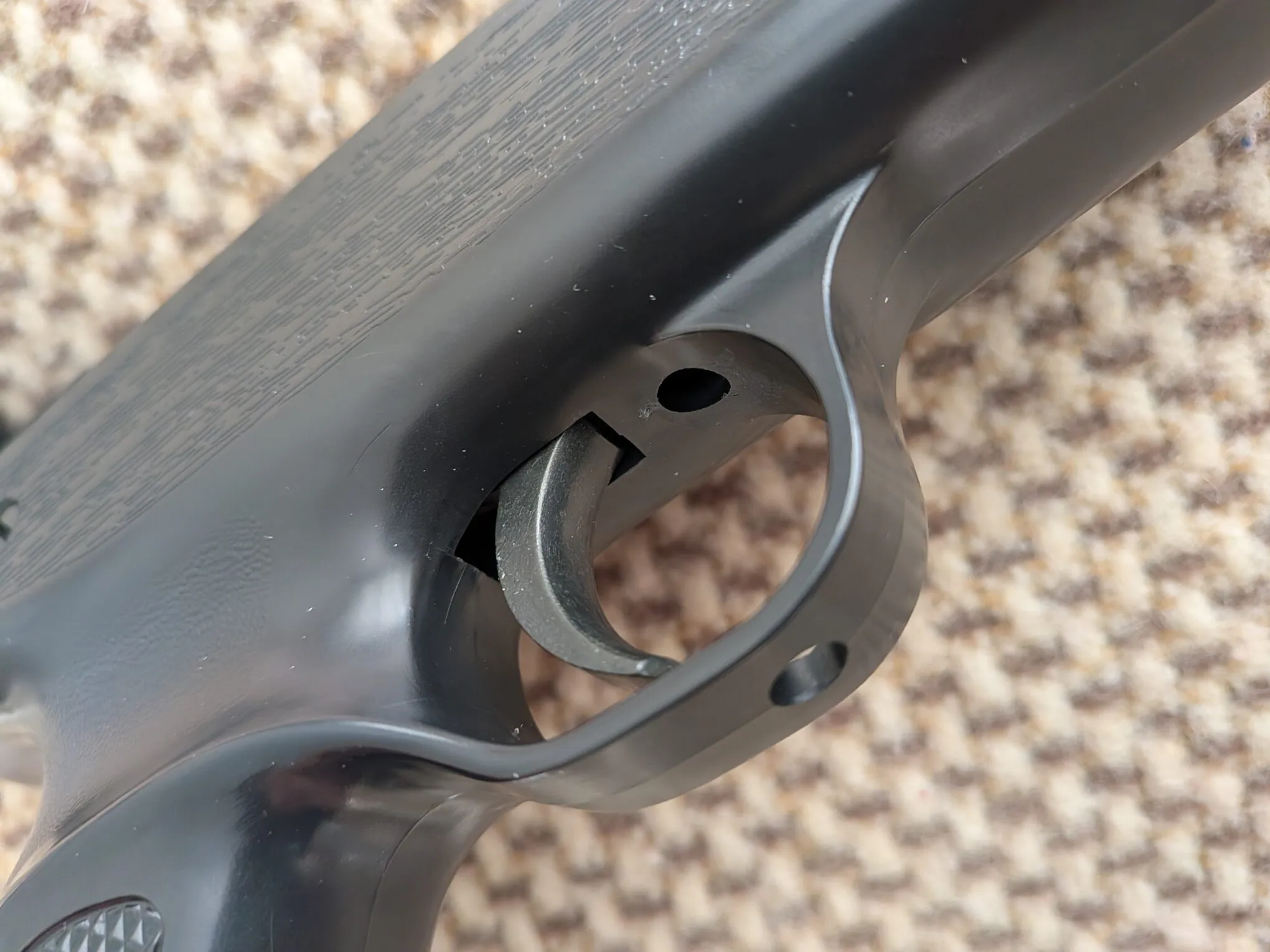
The trigger blade is also polymer. Weihrauch describes the mechanism as an adjustable two-stage match trigger. Its feel deserves a closer look in Shooting Experiences.
Shooting Experiences
A Different Trigger Feel
When I pull the HW70A’s trigger, it feels as though I am pressing against a substantial spring. The break is acceptable, but it is not as crisp as the HW45 or HW75. Those two pistols give me a more distinct wall and release.
The springy resistance reminds me more of the triggers on Weihrauch’s spring-piston rifles. This is a comparison of feel, not mechanism or measured pull weight.
A Baby HW30S?
The “baby HW30S” comparison makes sense to me. The long cylinder, hinged barrel, and stock beneath the action give it a familiar spring-rifle layout. Placed beside my Beeman R7, the family resemblance is easy to see.
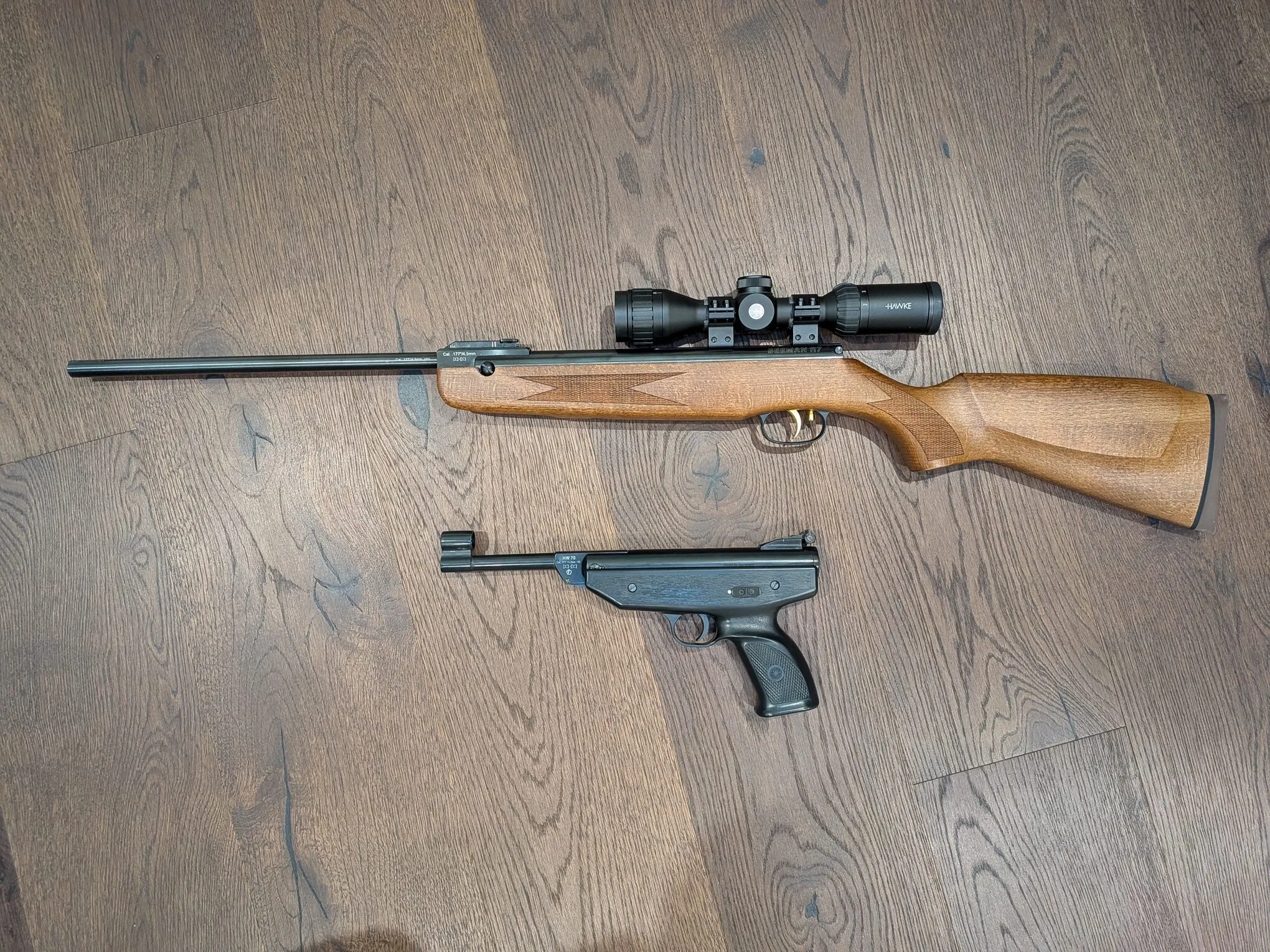
That resemblance is part of its character; the trigger and shooting behavior still need to be judged on the pistol’s own merits.
Rest Position Makes a Difference
The biggest practical difference I noticed was where the pistol contacted the rest. Supporting the synthetic stock gave me my best results; supporting the barrel gave me my worst results.
The photos below show stock support first, followed by barrel support.
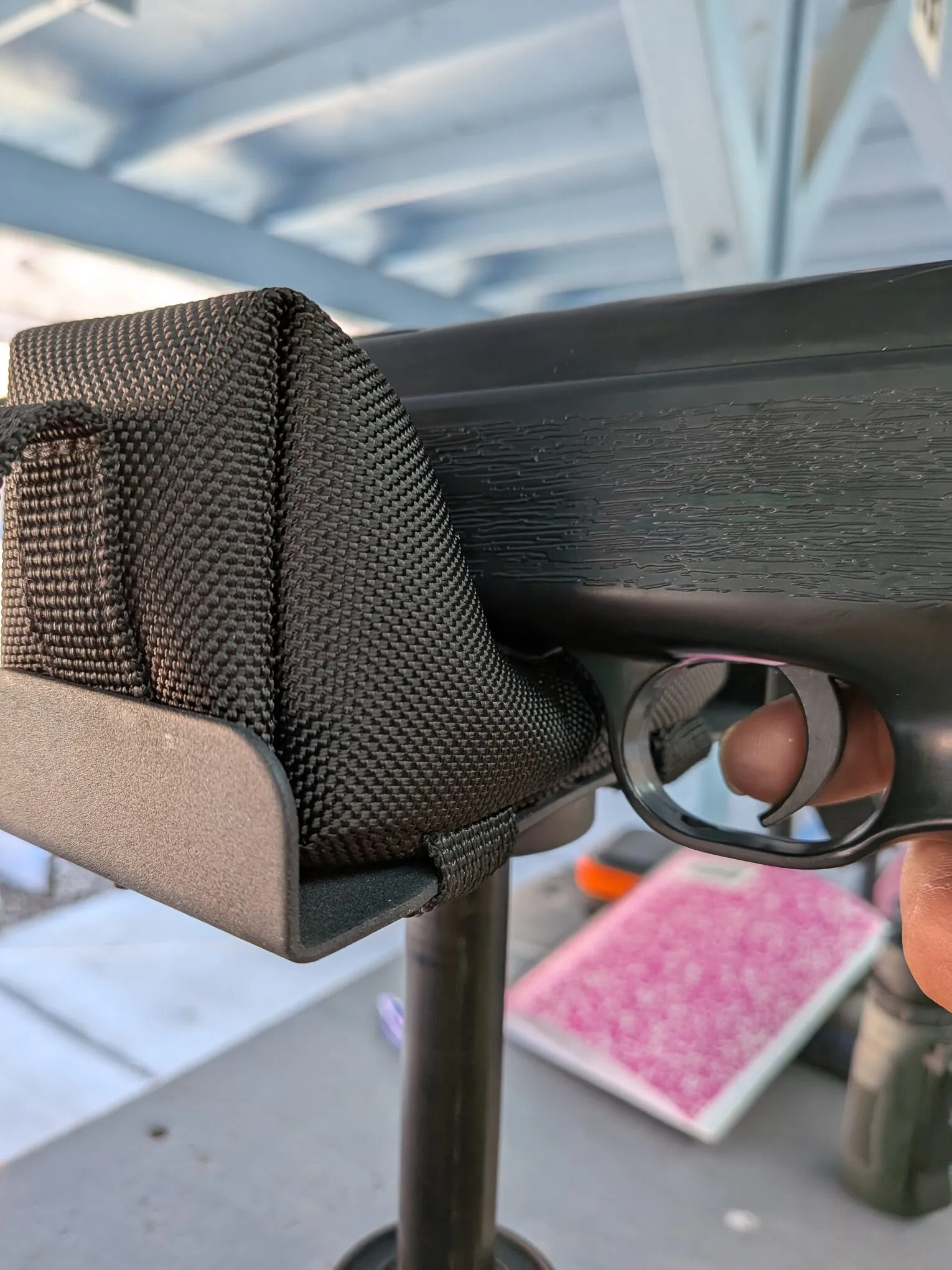
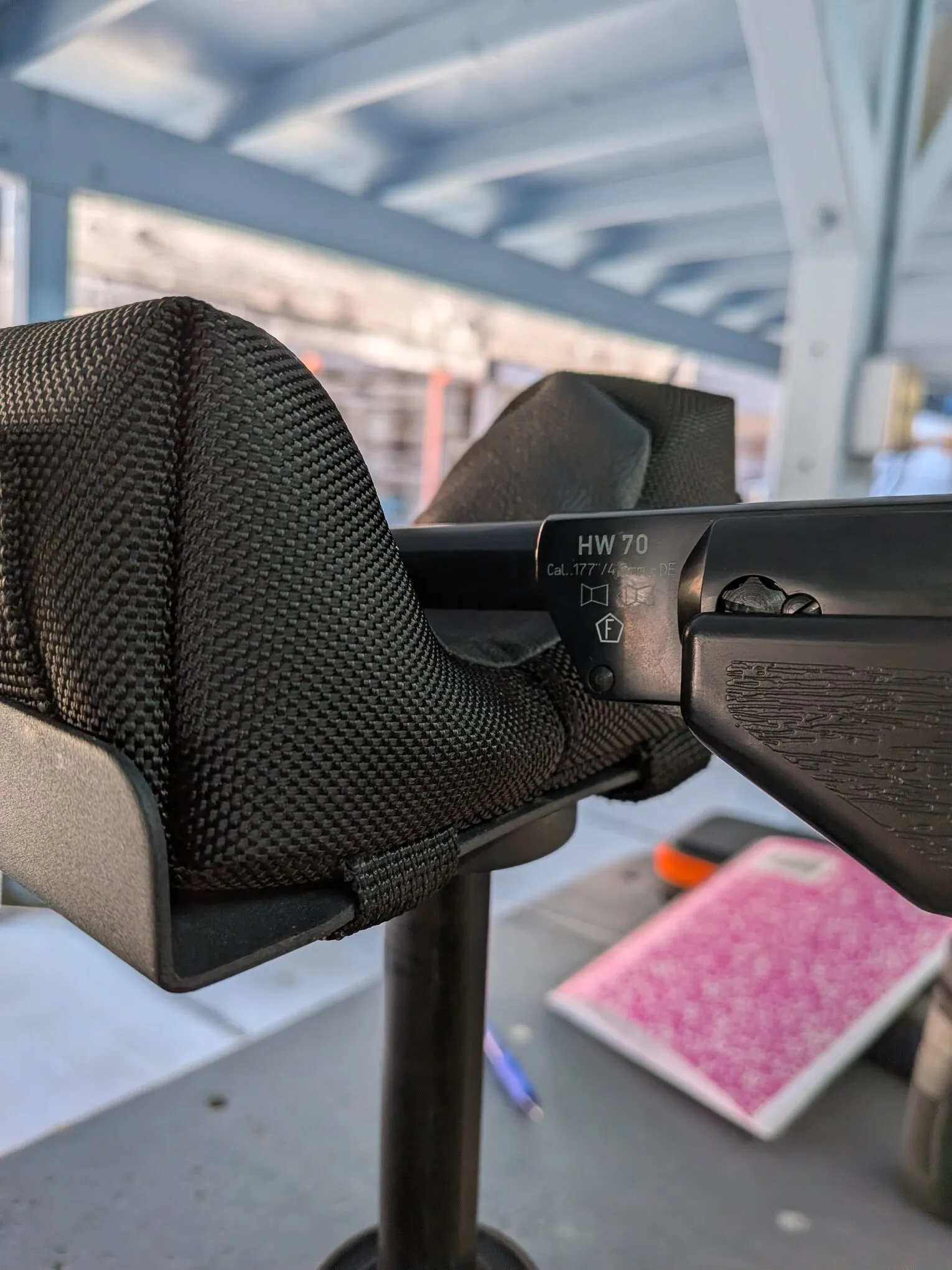
Target results at 15 yards: stock support on the left, barrel support on the right.
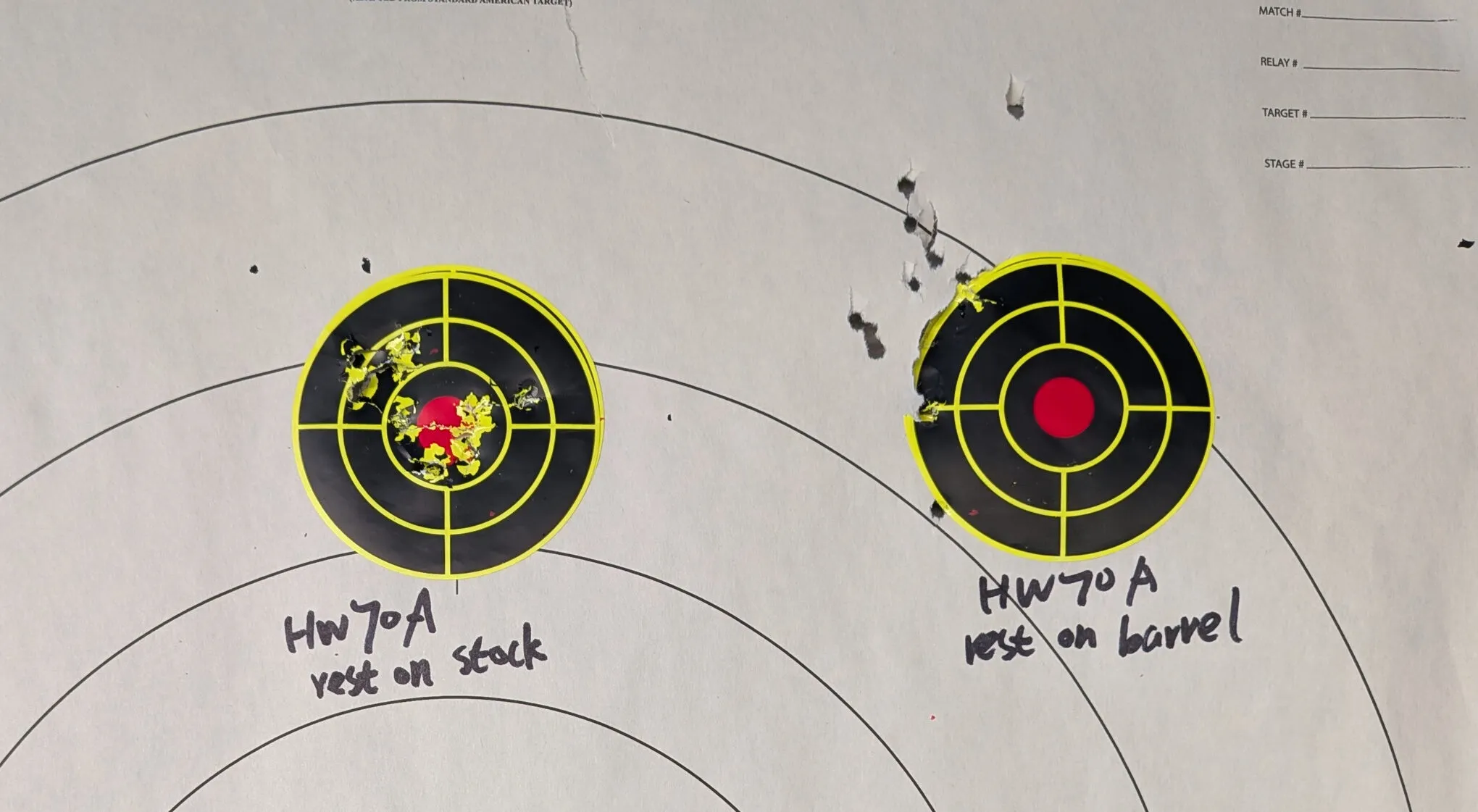
Stock support produced a tighter group around the bull, with another cluster toward the upper left. Barrel-supported shots landed mostly high and left, with greater vertical spread and several hits outside the sticker. These results support my impression that rest position matters considerably with this pistol.
The contact point may affect the pistol’s movement during firing, but I have not confirmed the cause. I will use stock support for further testing and measure repeated groups to check consistency.
Test Results
I recorded 15 shots with Meisterkugeln 7-grain pellets. The table includes the complete string, shots 1–15, using the figures reported by the chronograph app.
| Measurement | HW70A |
|---|---|
| Shots recorded | 15 |
| Average velocity | 449.3 fps |
| Minimum velocity | 444.4 fps |
| Maximum velocity | 457.0 fps |
| Extreme spread | 12.7 fps |
| Standard deviation, as reported by the app | 2.9 fps |
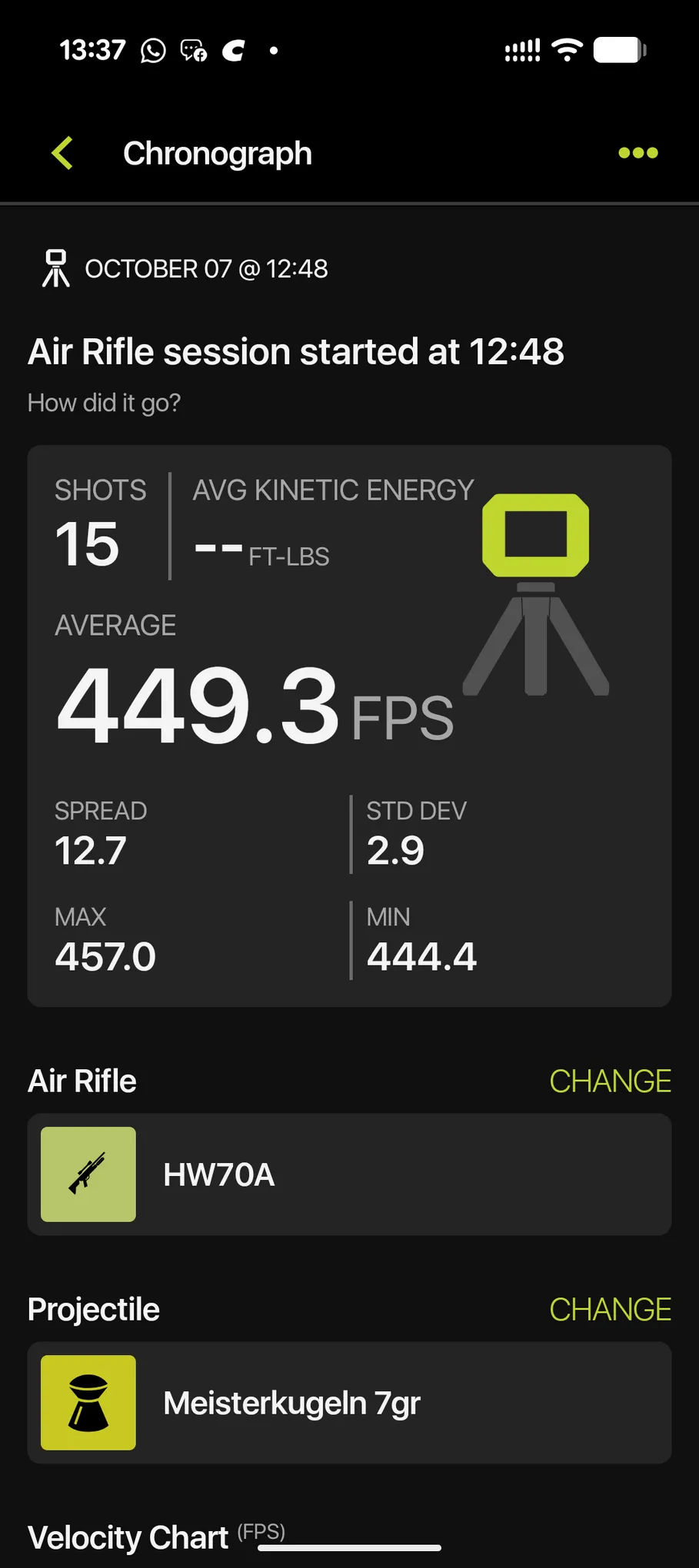
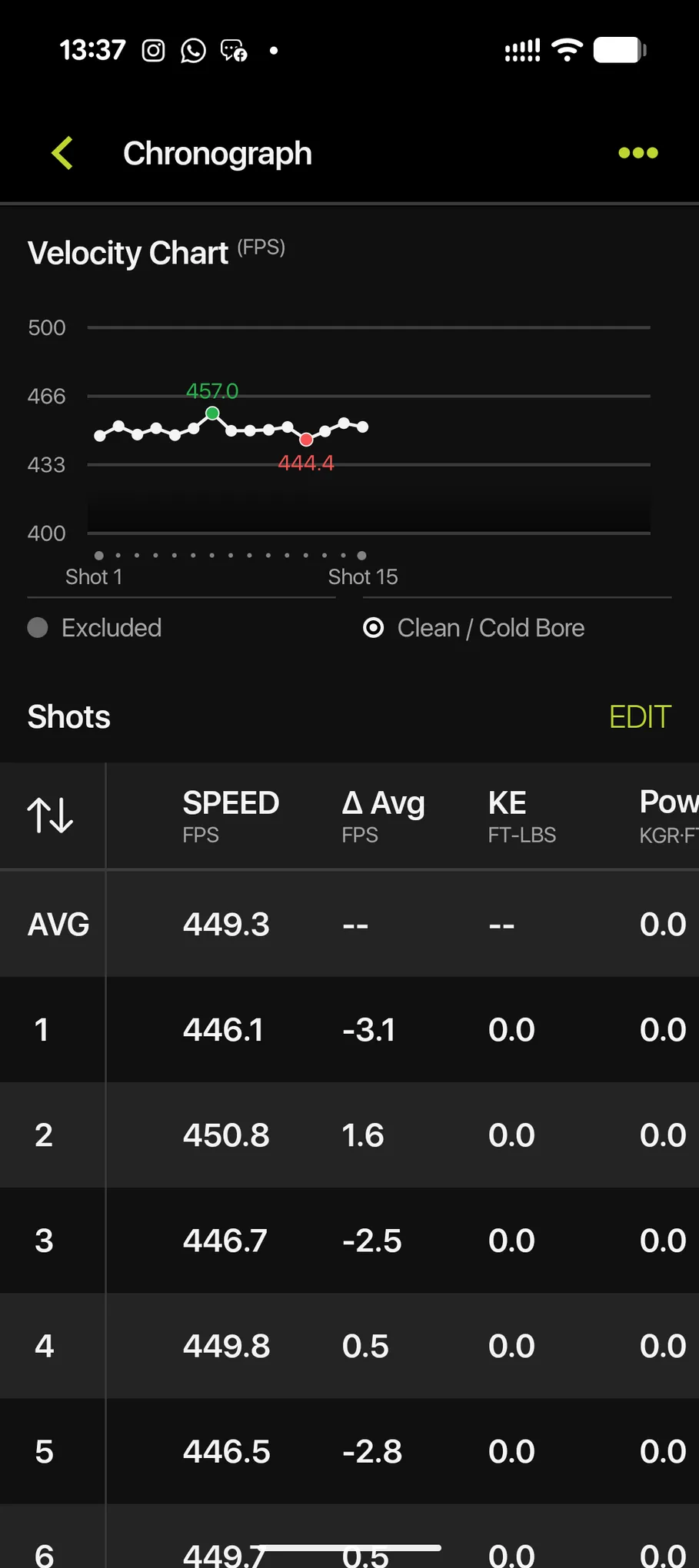
Data note: The app reports a 12.7 fps spread; subtracting the rounded endpoints gives 12.6 fps. Rounding may explain the difference. The screenshots do not identify whether the standard deviation uses the population or sample formula.
Velocity consistency was good in this 15-shot test. The reported standard deviation is about 0.65% of the average velocity, and the extreme spread is about 2.8%. The chart shows a fairly steady string, without an obvious sustained rise or fall.
Using the nominal 7-grain pellet weight and displayed average velocity gives a calculated muzzle energy of approximately 3.14 ft-lb, or 4.25 J.
My HW45 tests provide a useful reference. Each session used 15 shots with Meisterkugeln 7-grain pellets:
| Pistol / setting | Average velocity | Extreme spread | Reported SD |
|---|---|---|---|
| HW70A | 449.3 fps | 12.7 fps | 2.9 fps |
| HW45, low power | 504.1 fps | 10.0 fps | 2.4 fps |
| HW45, full power | 611.9 fps | 9.9 fps | 2.7 fps |
The HW70A produced less power than the HW45 at either setting. Its velocity spread was a little wider, but the standard deviations were close. These were separate sessions, so the comparison gives context rather than a controlled ranking.
Summary
The HW70A’s strongest qualities so far are its protected front sight, traditional break-barrel action, and consistent velocity. The main compromises for me are a less crisp trigger than the HW45 or HW75 and the difference that rest position makes to my results.
Who Is It For?
I see the HW70A as a pistol for recreational target shooters and spring-piston enthusiasts, especially Weihrauch rifle owners who enjoy its familiar break-barrel character. Its springy trigger and sensitivity to support position reward patience and consistent technique.
What I Like
- Protected front sight. The surrounding ring shields the blade, and its housing doubles as a useful cocking handle.
- Familiar break-barrel layout. The action gives the pistol much of its small-spring-rifle character.
- Good velocity consistency in this test. The 15-shot string stayed within a reported 12.7 fps spread, with a 2.9 fps standard deviation.
What I Don’t Like
- Less crisp trigger feel. The springy resistance is more noticeable to me than on the HW45 and HW75, even though the final break is acceptable.
- Sensitivity to rest position. Supporting the barrel gave me worse results than supporting the stock. That makes my initial accuracy impressions more dependent on the setup.
For me, the HW70A’s appeal is its small-spring-rifle character. Its consistent velocity and better stock-supported result at 15 yards are encouraging.